

3 Inch vs 4 Inch Lifting Belt: 5 Useful Fit Checks
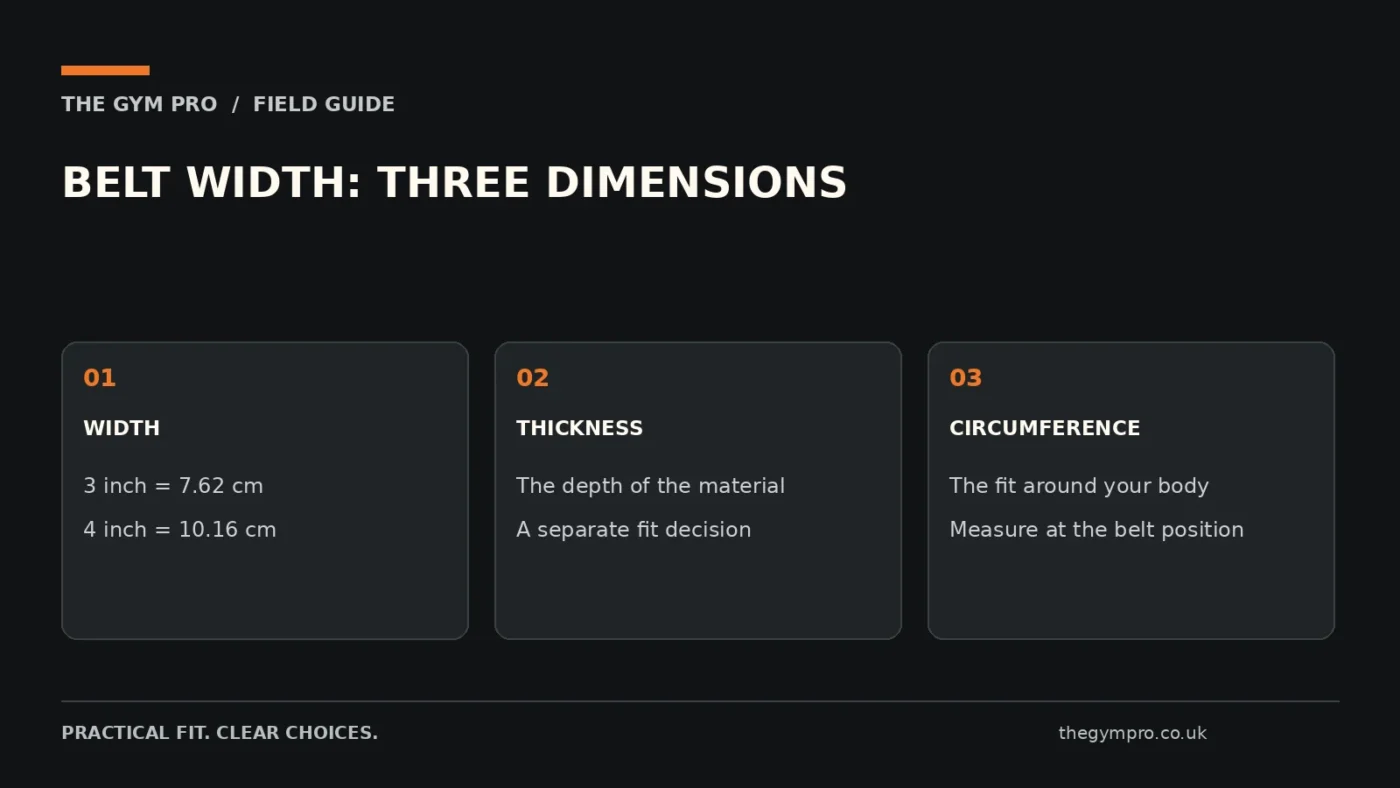
A 3 inch vs 4 inch lifting belt comparison is about the belt’s vertical width around your torso. Three inches is 7.62 cm; four inches is 10.16 cm. A narrower belt may feel easier to position when space between ribs and hips is limited, while a wider belt gives a larger contact area. The right choice depends on fit.
Table of Contents
3 inch vs 4 inch lifting belt: compare width first
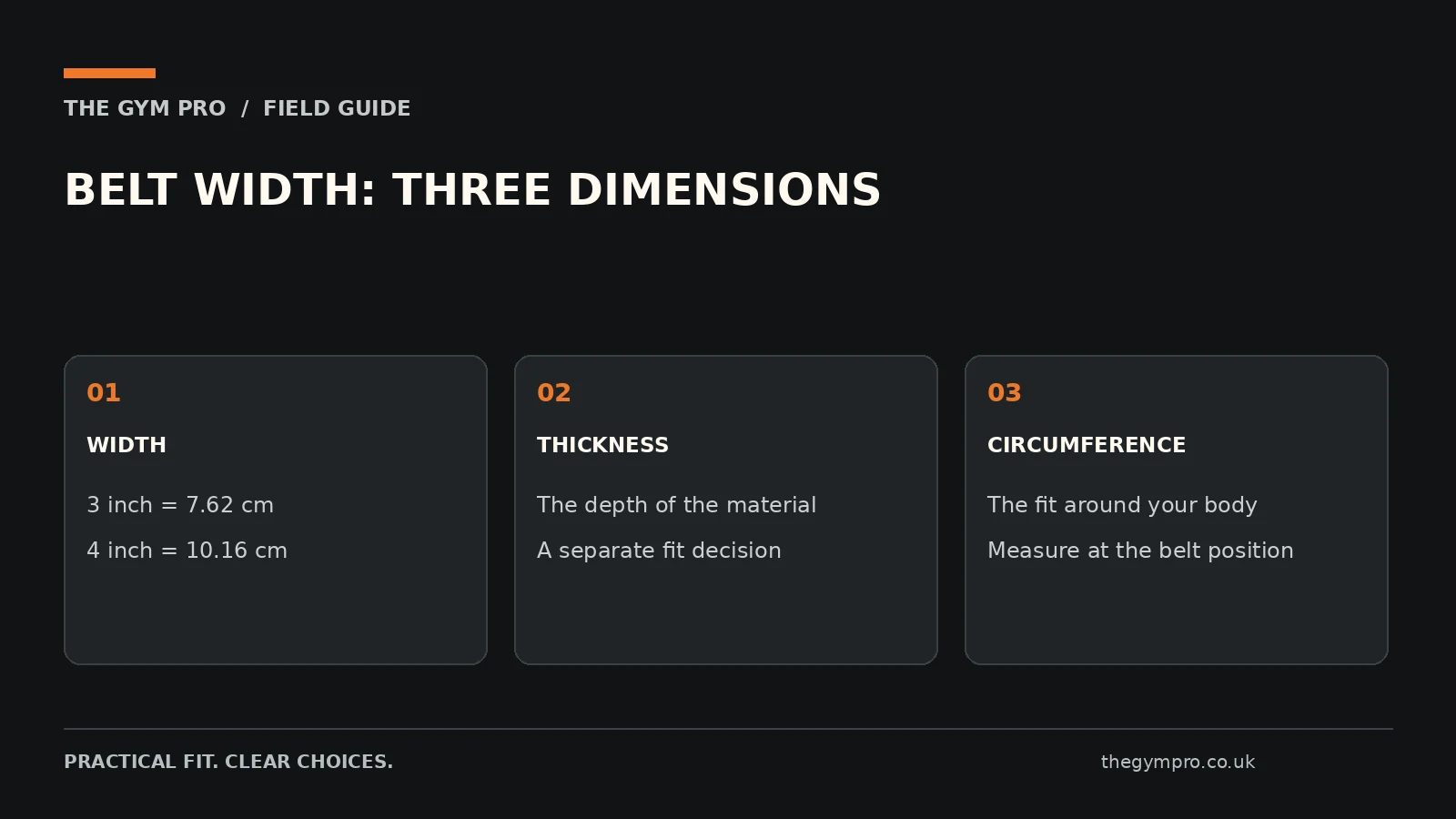
Do not confuse width with thickness or waist size. A 10 mm specification normally describes thickness; a size range such as small or medium describes a fitting range around the body. Those are separate buying decisions.
| Measurement | What it describes | Useful check |
|---|---|---|
| Width | Top-to-bottom size of the belt | Space and comfort around the torso |
| Thickness | Depth of the material | Stiffness and construction |
| Length or size range | Circumference the belt can fit | Your measurement against the size chart |
Nominal inch descriptions may be rounded. Where competition rules specify a metric limit, ask for the actual dimensions and check the governing body’s current rules rather than relying on the label.
3 inch vs 4 inch lifting belt: assess torso space
Two people of the same height can have different torso proportions. One may be comfortable in a wider belt, while another finds it contacts the ribs or hips in certain positions. A label aimed at men or women does not settle this either.
If possible, try different widths through the movements in which you plan to use the belt. Check standing and your familiar squat or deadlift setup with light or no load. Do not judge fit only while standing upright in a shop.
A wider belt should not have to be forced into a position that makes the movement uncomfortable. A narrower option is worth comparing if adjusting position does not solve contact. Equally, do not assume everyone with a shorter torso must choose three inches.
Our belt-fit guide for women covers individual proportions, while our belt-position guide explains how placement can change between lifts.
Check 2: compare squat and deadlift positions
A belt can feel different when you hinge down to a deadlift than when you stand at the top of a squat. Take time to test both positions if both lifts are part of your programme. Use a familiar technique rather than changing the movement to accommodate equipment.
Try a small change in belt height or angle if the manufacturer permits it and you know how to brace. If a width repeatedly interferes with the setup, compare a narrower shape or a different construction. Do not treat pinching as a required break-in stage.
Some lifters prefer one belt for all their work, while others use different widths or styles. There is no requirement to buy two belts. Choose a practical option for the exercises you actually train before adding more equipment.
A useful fitting note is specific: ‘comfortable standing, contacts hip in deadlift setup’ tells you more than ‘feels wrong’. Record the position and width so your next comparison changes one variable at a time.
Checks 3 and 4: compare shape and construction
Belts can be uniform in width or tapered, with a narrower front. A nominal four-inch tapered belt and a uniform four-inch belt are different shapes. Look at the complete outline and the dimensions at the front as well as the back.
Material, lining, edge finishing and stiffness also influence comfort. A narrower very stiff belt may feel different from a wider flexible one. Avoid assuming that every difference you feel is caused by width alone.
The separate 10 mm versus 13 mm belt guide covers thickness. Our lever versus prong guide covers closure. Use each comparison for the question it actually answers.
Inspect fastenings and the belt’s condition before training. A belt is equipment you use while practising a brace; width does not establish a guaranteed performance increase or protection against injury. It does not replace technique or appropriate loading.
Check 5: confirm circumference and any competition rules
Measure around the place you intend to wear the belt and follow that manufacturer’s chart. Leave useful adjustment room where the design allows. Do not order by trouser waist or assume that a three-inch belt is only sold for a small waist.
Our lifting-belt measuring guide explains how to create a repeatable measurement. Repeat it if you change the intended belt position, since the circumference may differ.
If you compete, check the federation’s current technical requirements and any approved-equipment list before buying. Material, fastening and manufacturer can matter as well as dimensions. A product described as a powerlifting belt is not automatically permitted at every meet.
For example, UKIPL publishes its belt requirements, including a maximum width in centimetres. Rules differ between organisations and can change, so use the exact rules for your event.
When browsing our Berserk lever belt or another design, confirm any unlisted dimensions before ordering. This guide does not certify that product as a particular width or competition-approved item.
An important inch-to-centimetre buying check
A nominal four-inch description deserves attention if an event uses an exact 10 cm limit: four inches converts to 10.16 cm. This does not mean every belt sold as four inches measures 10.16 cm. Retail descriptions can be rounded, and actual equipment may be made to a metric specification. Ask for the measured dimensions rather than deciding eligibility from the product name.
For a 3 inch vs 4 inch lifting belt comparison in ordinary training, the question remains comfort and fit. For competition, add a second check against the event’s current rules and any approved-equipment requirements. Keep those decisions separate. A belt can be comfortable to train in without being permitted at a particular meet, while a compliant belt can still be a poor fit for your torso. Neither label replaces checking the actual equipment.
Lifting-belt width questions
Is a 3-inch belt only for women?
No. Width should suit your proportions, movement and preference. Gendered marketing does not determine the space between your ribs and hips.
Is a 4-inch belt always better for squats?
No. A wider contact area is only useful if the belt fits and you can use your familiar setup. Compare comfort and function rather than assuming the largest width is best.
Can I use a narrower belt for deadlifts?
Yes, if it suits your fit and intended use. Check competition rules if relevant. You do not need to choose a width simply because another lifter uses it.
How do I decide between a 3 inch vs 4 inch lifting belt online?
Get the actual dimensions, compare a belt you have tried if possible and read the returns conditions. If you cannot establish torso fit from the listing, ask the seller before ordering.
Buy the width that lets you practise a repeatable brace and move comfortably. Change equipment to fit your training, rather than changing your training position merely to justify an equipment purchase.
SHOP OUR TOP GYM PRODUCTS
Barbell Brigade Pump Cover – Bronze & Red Gym T-Shirt
Creatine Meme T-Shirt – Funny Gym Shirt for Men
Berserk Muscle-Fit Gym T-Shirt – Anime Workout Tee
Mr Olympia T-Shirt – Joe Weider Oversized Bodybuilding Tee
Men’s Quick-Dry Gym Shorts – Muscle-Fit Training Shorts
Joe Weider 1965 Mr Olympia T-Shirt – Oversized Pump Cover
£30.99Original price was: £30.99.£21.99Current price is: £21.99.Powerhouse Gym Cap – Classic Denim Unisex Bodybuilding Hat
£26.99Original price was: £26.99.£15.99Current price is: £15.99.Muscle Duke Gym Belt – Powerlifting Belt for Men and Women