

10mm vs 13mm Lifting Belt: Which Should You Choose?
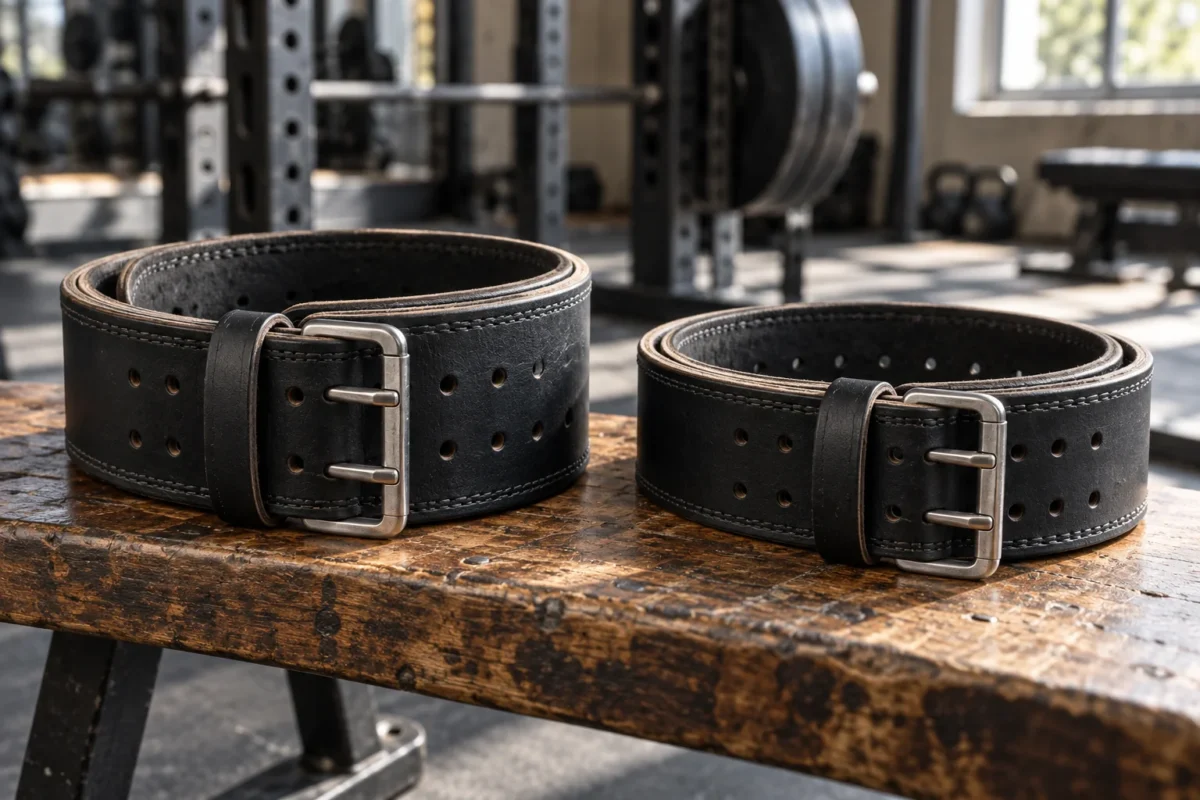
Choosing a 10mm vs 13mm lifting belt comes down to fit, stiffness and the exercises you actually train. A 10mm belt is a sensible first option to try if you want a substantial leather belt without committing to the thickest version. A 13mm belt is worth considering if you have tried a thinner belt and specifically prefer a more rigid feel. Neither thickness guarantees a bigger lift.
A thicker belt can feel reassuring on a product page and awkward at the bottom of your deadlift. Before choosing, check whether you can reach your normal start position, take a full breath and brace without the belt pressing painfully into your ribs or hips. If you can try both thicknesses, compare them at the same width and size. The better belt is the one you can set up in consistently, not the one with the larger number.
10mm vs 13mm lifting belt: quick comparison
| What to compare | 10mm belt | 13mm belt |
|---|---|---|
| Stated thickness | 10 millimetres | 13 millimetres |
| Typical shopping appeal | A substantial belt with a less bulky profile | A thicker belt for lifters who prefer rigidity |
| Flexibility | Depends on leather, layers and construction | Often firmer within the same product family |
| Setup comfort | Still needs checking in your lifting positions | Pay particular attention to rib and hip contact |
| Best buying test | Does it provide the feel you want? | Does the extra thickness solve a real problem? |
These are buying considerations, not a laboratory ranking. Two belts of equal thickness can feel different because their leather, lining, edges and closure differ. Compare actual models rather than assuming every 10mm belt behaves identically.
Thickness, width and size mean different things
Thickness is the depth of the material. Width is the distance from the top edge to the bottom edge. Size describes the circumference the belt fits. Mixing up these measurements is an easy way to buy an uncomfortable belt.
For example, SBD lists both its 10mm and 13mm models as 10cm wide. That illustrates why a thicker belt is not automatically a wider belt. A product marked “4 inch” usually describes width; it does not tell you which waist size to order. Check the complete specification instead of relying on the product photograph.
If a belt digs into your ribs when you reach the bar, the cause may be its width or position. Changing thickness alone may not fix that. Start with our guide to where a lifting belt should sit before deciding that your current belt is too thin or too thick.
When a 10mm belt makes sense
A 10mm belt is a reasonable starting point for a lifter shopping for a first substantial leather belt. That is a practical buying suggestion, not a rule that beginners must use a particular thickness. You still need the correct circumference, a suitable width and a closure you can operate easily.
It also makes sense to try this option if your sessions involve several different movements. Your belt needs to work when you stand tall, bend into a deadlift setup and move between sets. The most rigid option on the shelf is of little use if you keep removing it because the fit distracts you.
Consider a lifter who squats on Monday and trains Romanian deadlifts later in the week. Their priority might be a belt that feels secure in both positions. If a 10mm model achieves that, there is no automatic reason to upgrade. Keep a note of what you like and dislike before spending again.
When a 13mm belt is worth trying
The stronger reason to choose a 13mm belt is an established preference for its feel. Perhaps you have borrowed one, tested it during ordinary training and found that you like its firmness. That is more useful evidence than choosing it because an advanced lifter on social media wears one.
Within comparable construction, additional thickness commonly means a firmer feel. However, “firmer” and “better” are separate judgements. Check whether the belt lets you reach your normal start position and whether its edges press into your body. Comfort here means that you can perform the movement without the belt forcing an unwanted adjustment.
Do not invent a strength threshold for upgrading. A particular squat number does not prove you need 13mm. Likewise, being experienced does not require you to abandon a belt that works. An upgrade should address something you have noticed in your current setup, such as a preference for less flex.
Which thickness is better for squats?
Test the belt through your normal squat routine before judging it. Fasten it, take your usual stance, and perform a controlled bodyweight squat. Then use normal warm-up sets. Notice whether the top edge contacts your ribs, whether the buckle gets in the way, and whether your position feels repeatable.
Avoid changing belt thickness, stance and bar position together. If several variables move at once, you will struggle to identify what improved or worsened the setup. A simple comparison keeps the exercise, clothing and warm-up similar while you assess the belt.
A useful observation is “I can brace and reach my usual depth without the belt shifting.” An unhelpful one is “this must be better because it is thicker.” Your training log should record the first kind of information. Our lifting belt benefits guide explains the wider decision about when to use a belt.
Which thickness is better for deadlifts?
Deadlift setup deserves its own check because reaching the bar changes the relationship between your abdomen, ribs and hips. A belt that feels fine while standing can become awkward when you hinge. Check the actual movement rather than relying on the fit in front of a mirror.
If the belt catches your thighs or makes you change your start position, review its height, width and fastening position. Do that before assuming the solution is a different thickness. Some lifters prefer a different belt setup for pulling; there is no need to force every exercise into the same arrangement.
Practise with ordinary warm-up loads when trying unfamiliar equipment. The aim is to learn how it behaves, not to turn the first session into a personal-record attempt. Keep the belt choice separate from your deadlift technique and setup.
Lever or prong: choose the closure separately
A lever closure and a prong buckle can both appear on substantial leather belts. Thickness does not determine which fastening you must buy. Your preferred adjustment method matters, particularly if you change tightness between exercises or your waist measurement fluctuates.
A traditional fixed lever may need tools to reposition its mounting, whereas some designs offer easier adjustment. Check the exact mechanism. Do not assume that every lever belt adjusts like the one you saw in a video. A prong belt also needs usable holes and a buckle you can fasten without a struggle.
For the detailed closure comparison, read lever vs prong lifting belts. Make three separate decisions: circumference first, width and thickness next, then fastening. That prevents one attractive feature from distracting you from a poor overall fit.
A five-minute belt buying checklist
Before ordering, write down your measurement at the position where you wear the belt. Compare it with the specific product chart. Check which units are used, whether your measurement falls near a size boundary, and whether the belt has room for adjustment in both directions.
Next, confirm the stated material, width, thickness and closure. If thickness is not listed, ask rather than inferring it from a photograph. Product names such as “heavy duty” do not supply a measurement. The same applies to competition claims: check your federation's current requirements and approved equipment list for the exact model.
Finally, read the return conditions before using a new belt. Keep any first fit check within those conditions. You want to discover an obvious sizing problem before putting an item through sweaty training or modifying its hardware.
Common mistakes when comparing belt thickness
Buying the smallest possible size can leave too little adjustment room. Buying an oversized belt “for bulking” can create the opposite problem. Choose against your current measurement and the actual chart, with sensible room to adjust rather than a guess about future bodyweight.
Another mistake is trying to solve uncomfortable edges by tightening harder. Recheck the fit and position instead. A belt should not prevent you from taking your normal preparatory breath. Read how tight a lifting belt should be for that separate issue.
Do not force a new leather belt to soften by soaking it or sharply folding it unless its maker specifically instructs you to. Care varies by construction. Our leather lifting belt break-in guide provides a useful starting point for protecting your purchase.
Frequently asked questions
Is a 13mm belt better than a 10mm belt?
It is thicker, but that does not make it universally better. Choose it if you prefer the feel of that actual model and it fits your lifting positions. A comfortable, correctly sized 10mm belt may suit your training better.
Can beginners buy a 13mm belt?
Experience alone does not determine the purchase. Beginners should first understand why they want a belt, how to fit it and how to use it. Trying different constructions is more informative than choosing the thickest specification immediately.
Does a thicker belt let you lift more weight?
You cannot predict a strength increase from thickness alone. Technique, training and familiarity matter. Treat any equipment change as something to practise with rather than an automatic increase in your working weight.
Are all Gym Pro belts 10mm or 13mm?
Do not assume that. Check each product's current description and dimensions. You can explore the Berserk Lever Belt for its listed features, but this article does not claim it matches either thickness specification.
Choose the belt that works in your training
Start by finding the correct size, then compare thickness in the positions you use. If a 10mm model gives you the fit and feel you want, keep that as a valid choice. If a tested 13mm model feels better for your routine, you have a concrete reason to choose it. The best purchase is the one you can explain without referring to somebody else's lift numbers.
Sources and specification checks
The dimensional examples were checked against the manufacturer's SBD 10mm belt specification and SBD 13mm belt specification. For competition, consult the IPF's current technical rules page. The buying checklist is The Gym Pro's practical editorial guidance; it is not a claim of comparative product testing.
SHOP OUR TOP GYM PRODUCTS
Samurai Weightlifting Belt – Japanese Calligraphy Gym Belt
Heavy Washed Gothic Hoodie – Oversized Y2K Streetwear
Kevin Levrone Uncrowned T-Shirt – Cotton Gym Pump Cover
Mike Mentzer T-Shirt – Heavy Duty Muscle-Fit Cotton Tee
I’m Afraid of Women Gym Retro T-Shirt – Funny Bodybuilding Tee
Yujiro Hanma Gym Hoodie – Oversized Anime Pump Cover
£32.99Original price was: £32.99.£23.99Current price is: £23.99.Ronnie Coleman Gym Merch – Legalize Tren Cotton T-Shirt
Men’s Quick-Dry Gym Shorts – Muscle-Fit Training Shorts