


Can You Wear Joggers to the Gym? 7 Useful Fit Checks
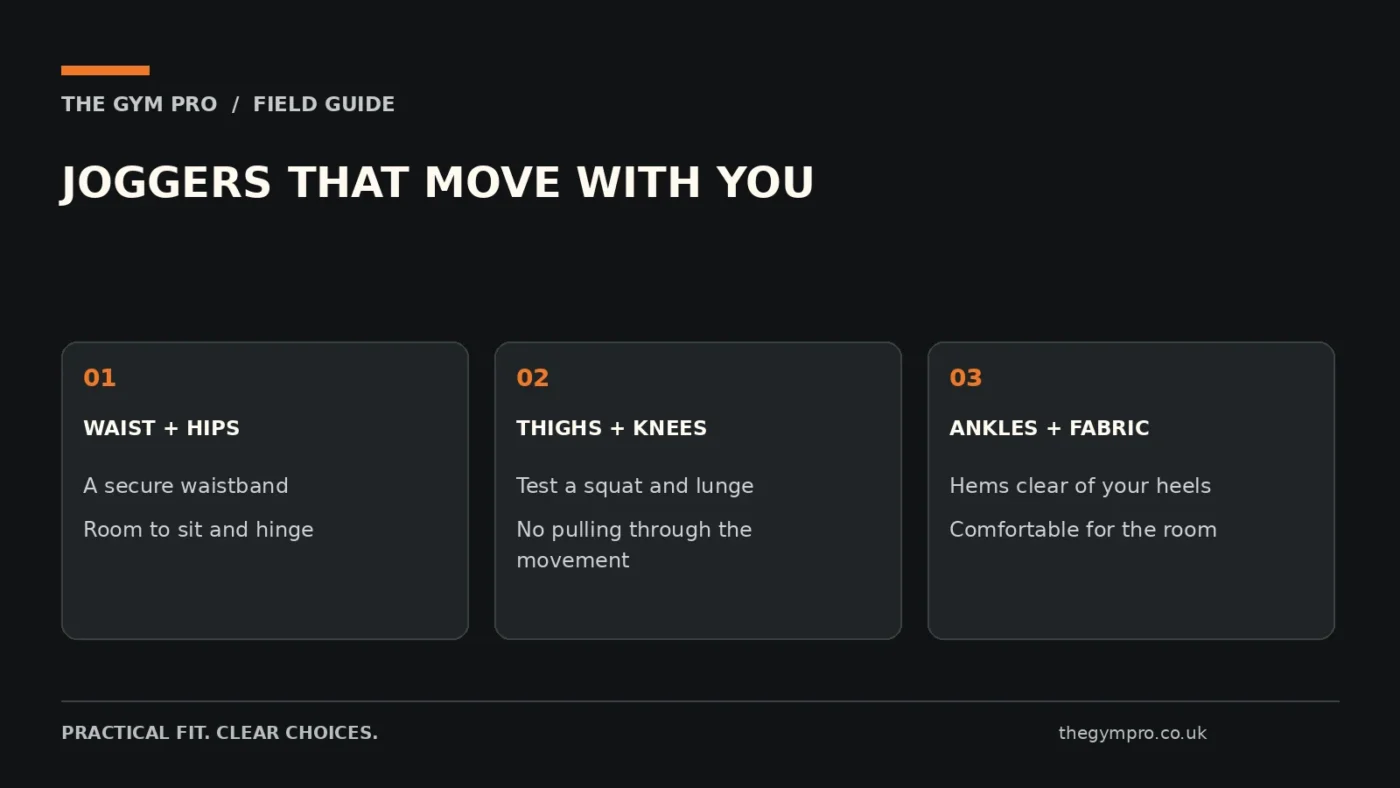
Can you wear joggers to the gym? Yes, provided they allow your planned movements, feel comfortable at the room’s temperature and stay clear of equipment. Check the waistband, hip and thigh room, ankle hems and loose cords. A pair made for lounging can feel very different from lightweight training trousers.
Table of Contents
Can you wear joggers to the gym? The practical answer
There is no rule that every gym session requires shorts. Some people prefer the coverage of joggers, particularly for early starts, cooler rooms or travelling to the gym. Choose by how the garment behaves in the session rather than by its name.
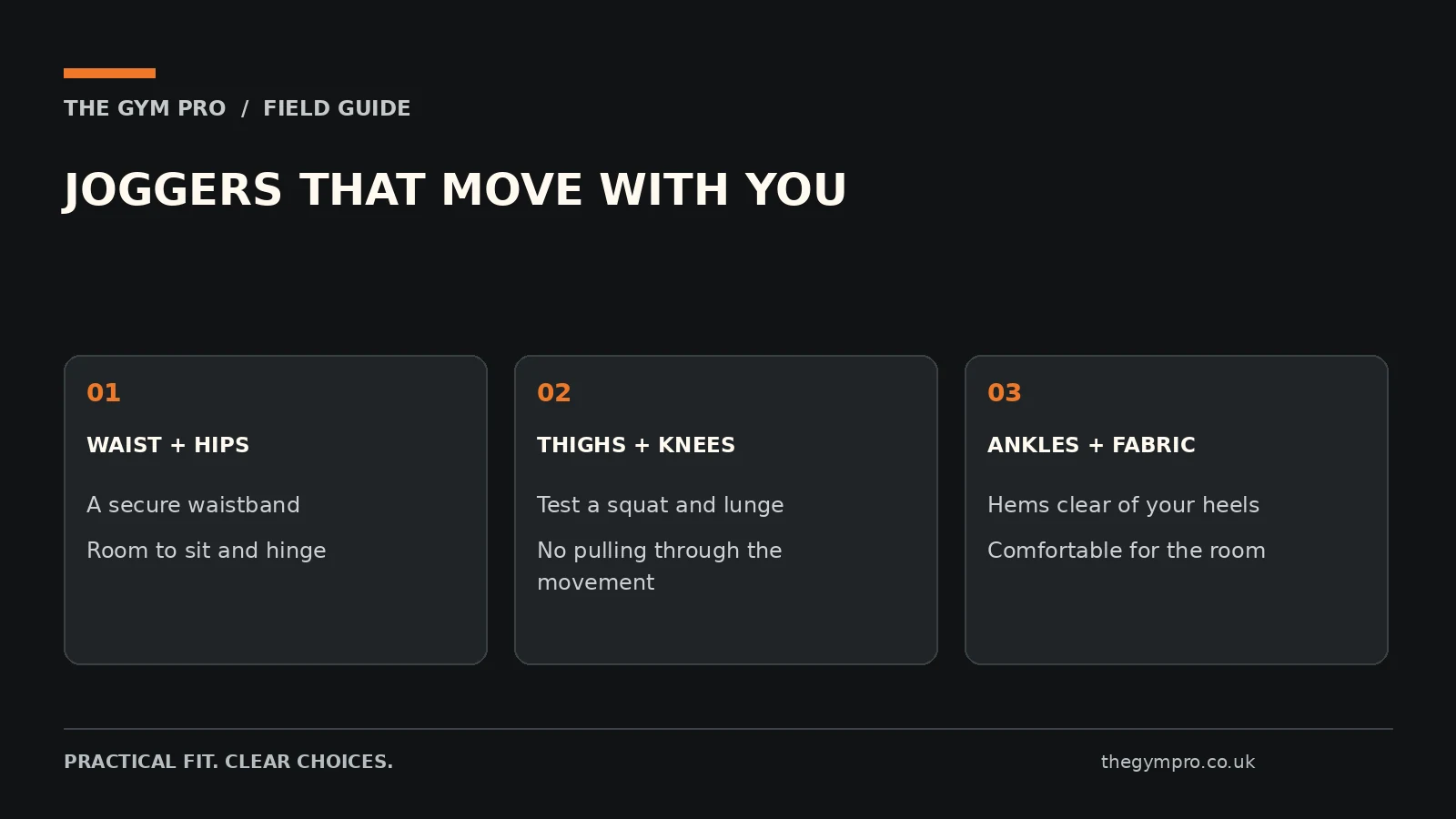
| Area | What to look for |
|---|---|
| Waist | Stays in place without constant tightening |
| Hips | Room to sit and hinge |
| Thighs | No pulling when you squat or lunge |
| Knees | Enough room through the movement |
| Hem | Clear of the floor and your heel |
| Pockets | Secure contents without pressure on a bench |
| Fabric | A comfortable balance of warmth and breathability |
If one area fails, a different cut may work better than simply sizing up. A larger waistband does not necessarily solve a narrow thigh or an awkwardly low crotch.
Check movement before choosing a size
Try the garment with the underwear or base layer you normally train in. Walk, sit, lift one knee and take a comfortable squat. The trousers should move with you without needing to be pulled into place after every repetition.
If the fabric pulls across the hips when you sit, check both size and rise. If it catches at the knees, look at the leg shape and stretch. If the crotch hangs so low that it limits your stance, a larger size may make the problem worse.
Do not use tightness as proof that a garment is supportive. Compression clothing is a separate product category with its own construction. Ordinary joggers should fit the way they are designed to fit, without becoming a substitute for properly selected training equipment.
Use actual waist, hip, thigh and length information where available. Supplier and brand sizing varies. Compare with trousers you already own rather than assuming your usual letter size will fit every style.
Training joggers and heavy sweatpants are different
A thick brushed fabric may feel comfortable outdoors or while warming up, but too warm for a long indoor cardio session. A lighter fabric may be easier to use across lifting and walking. Neither is universally best; the room and your session matter.
Fibre names alone do not tell the whole story. Fabric weight, knit, finish and garment construction affect the feel. Read the listing and care label rather than treating every polyester trouser as lightweight or every cotton trouser as thick.
Our cotton versus polyester gym-clothes guide explains the material decision. If you repeatedly finish sessions feeling uncomfortable in heavy joggers, try a lighter pair or shorts rather than assuming discomfort is part of training.
For a winter journey, a warm layer can still be useful. The solution may be changing into a lighter pair indoors. Our winter gym-layer guide separates travelling, warming up and training.
Wearing joggers for lifting
For squats, hinges and lunges, look for room through the hips and thighs and a waistband that stays secure. For seated machines, check the knees and pockets. Heavy keys or a phone can become uncomfortable when trapped between your leg and a pad.
Keep hems clear of your shoes and the floor. Tapered or cuffed ankles can make this easier, but the correct length still matters. Secure drawstrings and avoid leaving cords hanging beside moving parts.
Loose bodybuilding trousers are another option if you like a relaxed silhouette. They are not the same as tapered joggers. Our loose bodybuilding trousers can be compared by their current size information and images. Check the actual cut before deciding whether it suits your workout.
A comfortable loose shape can work, but excessive fabric is not automatically useful. Make sure it does not interfere with your stance, catch on equipment or cover your feet. Fit takes priority over copying a particular bodybuilding look.
Wearing joggers for cardio or mixed sessions
For a session that includes cycling, rowing or running, try the relevant movements before committing to the outfit. Check that the ankles stay clear of pedals and that the knees do not pull when bent. Follow equipment instructions and the gym’s clothing rules.
A pair suitable for a short warm-up may feel different after a longer cardio block. If your routine regularly combines lifting and cardio, consider the most demanding part of the session rather than dressing only for the first five minutes.
Pockets deserve particular attention. Unsecured items can move around during cardio. A secure zipped pocket may be useful, but check its position when bending and sitting. You can also leave valuables in a locker where one is available.
Bring a change for the trip home if your clothes become damp. Do not leave used kit sealed in a bag for days. Our gym-clothes washing guide covers care and persistent smells.
When the waistband fits but the thighs do not
A common shopping problem is a pair that fits comfortably at the waist but pulls when you sit or squat. Going up a size may add useful thigh room, but it may also leave an unstable waist or excessive leg length. Check the size chart for hip and thigh measurements where available. If those are missing, ask for them or choose a cut with clearer measurements instead of repeatedly guessing.
Can you wear joggers to the gym if ordinary tapered pairs feel restrictive? Yes, but compare another shape rather than treating the word joggers as one fixed design. A roomier upper leg with a clear ankle hem may be more useful than a very narrow taper. Try the movements you actually plan to use, then choose the pair that needs the least adjustment. The right result is specific to the garment and your proportions.
Common questions about gym joggers
Can you wear joggers to the gym instead of leggings?
Yes. Joggers offer a different silhouette and may feel less close-fitting. Choose the style you prefer, then check movement, coverage, temperature and hems. There is no requirement to wear leggings.
Are joggers or shorts better for leg day?
Either can work. Shorts may feel cooler; joggers offer more coverage. Check both through squats, seated exercises and lunges. Our leg-day outfit guide helps compare the whole setup.
Can ordinary sweatpants work for training?
Sometimes. A comfortable pair may suit a straightforward weights session, but heavy or restrictive lounge trousers may be less practical. Test the pair you own instead of buying technical clothing automatically.
Should I size up in gym joggers?
Use the measurements and intended fit. Sizing up may add length and waist room without fixing the cut. A different style can be a better answer when the thighs or rise do not suit you.
For another manufacturer’s view, adidas discusses training joggers with an emphasis on lightweight fabric and stretch. Can you wear joggers to the gym? Yes—the useful decision is choosing a pair that works throughout your actual session.
SHOP OUR TOP GYM PRODUCTS
No Pain No Gain Weightlifting Belt – Heavy-Duty Support
£32.99Original price was: £32.99.£26.99Current price is: £26.99.Barbell Brigade Pump Cover – Bronze & Red Gym T-Shirt
Mr Olympia Amateur Korea T-Shirt – Oversized Cotton Tee
Nasser El Sonbaty Shirt – Uncrowned Mr Olympia T-Shirt
Loose Bodybuilding Trousers – Hardcore Gym Workout Pants
Samurai Weightlifting Belt – Japanese Calligraphy Gym Belt
Tren and Jerry’s T-Shirt – Funny Gym Pump Cover
Milk Makes My Tummy Hurt T-Shirt – Funny Gym Pump Cover