

How to Measure Lifting Belt Size: A Step-by-Step Guide
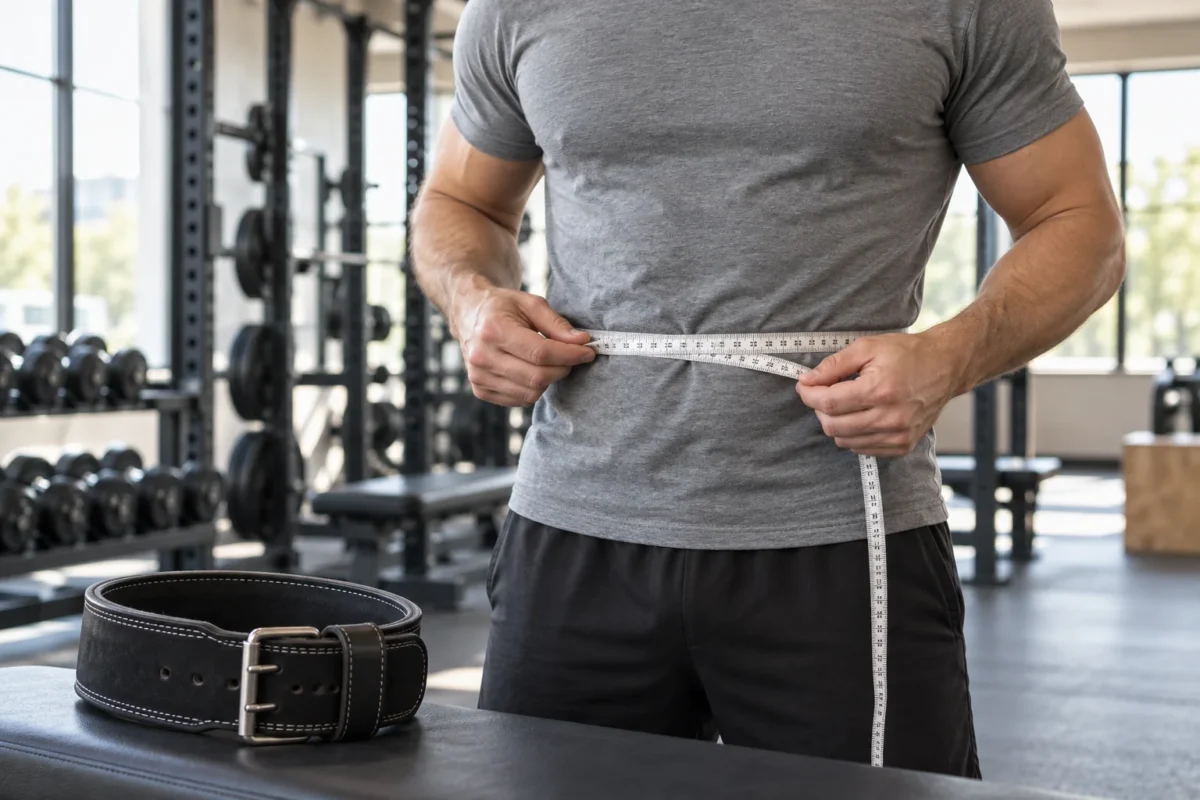
Few purchases are more frustrating than a new lifting belt that barely closes—or is already on its tightest setting. To measure lifting belt size, measure your torso where you intend to wear the belt, then compare that number with the exact product's size chart. Do not order from your jeans size or assume that a Medium fits the same way across different belts. Follow the manufacturer's instructions about clothing and abdominal bracing when taking the measurement.
Take the measurement twice at the height where you will actually fasten the belt, standing normally and following the maker’s instruction on breathing. Compare both readings with that product’s chart, especially if you fall between sizes. A usable belt should leave adjustment room in both directions; a belt that closes only on its last hole may become frustrating as clothing or bodyweight changes.
What you need before measuring
Use a flexible tailor's tape, the product size chart and a place to record your result. A phone note is enough. A mirror or another person can help you check that the tape stays level around your back. Avoid using a rigid metal DIY tape around your body.
Read the sizing instructions before starting. Different makers may ask for a measurement over clothing, with the abdomen braced, or in another stated position. The correct method is the one used to produce that specific chart. If the listing is unclear, ask the seller rather than combining instructions from several brands.
Record centimetres and inches if you shop across different sites. One inch equals 2.54cm, so an 86cm measurement is approximately 33.9 inches. Keep the original number too. Repeated rounding can become confusing when your result is close to a size boundary.
How to measure lifting belt size in five steps
1. Find your intended belt position
Locate the height at which you will actually wear the lifting belt. This may differ from the waistband of your trousers. The tape needs to follow the belt's route around your torso, not the lowest or narrowest measurement you can find.
If you are unsure about positioning, read where a lifting belt should sit. Decide the position before choosing a size. Otherwise, you might measure one part of your body and wear the belt somewhere with a different circumference.
2. Use the clothing specified by the maker
Measure over the layer the sizing instructions require. If no guidance is given, clarify whether the chart assumes bare skin or ordinary training clothing. A thin shirt and a thick hoodie do not create the same measurement, particularly near a size boundary.
Do not measure over a bulky coat because you happen to be wearing it. Make the measurement relevant to how you train. If you regularly wear the belt over a substantial layer, mention that when asking for sizing advice.
3. Keep the tape level and flat
Wrap the tape around the intended belt line and check its path in the mirror. It should lie flat rather than twist into a narrow cord. Watch for the tape drifting lower at the back; that can produce a number from a different route around your body.
Take up loose slack without pulling the tape hard enough to indent your torso. You are measuring circumference, not trying to recreate the strongest possible squeeze of a belt. Follow any maker-specific bracing instruction and keep the position consistent.
4. Read and repeat the measurement
Note the result, release the tape and measure again. If the numbers differ meaningfully, check the height, tape angle and clothing. Repeating the same method is more useful than averaging several measurements taken in different positions.
Write a short description beside the number, such as “86cm, thin training shirt, intended squat belt position, manufacturer's bracing instruction followed.” That gives you something useful to send to the seller if two sizes appear possible.
5. Compare with the exact product chart
Now select the chart for the belt you intend to buy. Confirm that it lists a body measurement or usable fitting range rather than the overall length of the belt laid flat. Those are different numbers. A belt includes an overlapping section and fastening hardware, so total length is not the same as waist fit.
Check the chart again when you change to another product. A shared letter size does not prove two models fit alike. The product chart should decide the size, rather than your usual T-shirt size or what a training partner wears.
A real Gym Pro size-chart example
The following waist ranges were listed for the Berserk Lever Belt when this guide was drafted. They are specific to that product and should be rechecked on its current listing before ordering.
| Listed size | Listed waist range |
|---|---|
| XS | 55–74cm |
| S | 65–80cm |
| M | 72–90cm |
| L | 82–100cm |
| XL | 92–110cm |
Notice the overlap. An 86cm measurement falls inside both M and L. That does not mean you should automatically choose the larger option. It means you need to consider the available adjustment, the maker's measurement method and the closure's setup before deciding.
For this example, 86cm sits nearer the middle of L's stated range than M's. That is a useful observation, not a guarantee that L will fit every 86cm lifter. Ask about the actual lever mounting positions and usable adjustment if you are unsure. Do not apply this chart to a different Gym Pro belt.
What if you are between two sizes?
First, distinguish an overlap from a gap. In an overlap, your measurement is included in two ranges. In a gap, it is included in neither. A gap requires clarification from the seller; guessing based on the nearest letter can produce a belt that does not close as expected.
Where ranges overlap, a position away from the extreme end of the useful adjustment is often preferable. Manufacturer guidance such as SBD's also considers room to adjust in both directions. However, adjustment systems differ, so apply that principle through the actual product's instructions.
Explain your measurement and intended use to the seller. A useful question is: “I measured 86cm using your stated method. Both M and L include this. Which gives me usable settings on either side of my present fit?” That is more actionable than simply asking whether the belt runs small.
Bulking, cutting and everyday changes
Buy for a measurement you have taken, with practical adjustment room. Do not order a substantially oversized belt because you hope to gain muscle. Equally, choosing a belt that barely fits because you plan to lose weight can make it unsuitable for your current sessions.
If your measurement changes during a longer training phase, repeat the same method and compare the usable settings. Keep a simple record so you know whether an adjustment reflects a real change or a different measuring position. You do not need to measure before every workout.
Clothing and normal day-to-day variation can also influence how a belt feels. If the closure lets you make small changes easily, use that feature as intended. A fixed lever may require a more deliberate setup adjustment. Our lever vs prong belt guide explains the different fastening considerations.
Check the fit when the belt arrives
Start with the manufacturer's fitting instructions and the retailer's return conditions. Put the belt on over your normal training layer. Check that you can fasten and release it without forcing the mechanism. If a lever needs mounting adjustment, follow the supplied instructions rather than improvising hardware positions.
Stand normally, prepare your breath as you would for a lift, and check whether the belt feels stable. Then perform an unloaded squat or hinge. It should not force an obvious change to your normal movement. The aim is to identify fit issues, not to prove the belt by testing a maximum weight.
If it closes but presses painfully into your ribs or hips, circumference may not be the only problem. Width, placement and construction deserve attention. Read how tight a lifting belt should be rather than treating every uncomfortable fit as a reason to tighten harder.
Seven sizing mistakes to avoid
- Ordering from the number on your jeans label.
- Measuring at your trouser waistband when the belt will sit higher.
- Letting the tape slope around your back.
- Sucking in your stomach to obtain a smaller number.
- Assuming all Medium belts use the same fitting range.
- Confusing the belt's laid-flat length with torso circumference.
- Ignoring the adjustment method when your measurement sits in an overlap.
These mistakes share one cause: using an approximate substitute for the actual fitting information. Measuring carefully once is quicker than managing an avoidable exchange. Keep your result and the chart together so that the order can be checked before you complete it.
Frequently asked questions
Is lifting belt size the same as trouser size?
No. Trouser labels and the height of the waistband do not reliably represent the circumference where a lifting belt sits. Measure at the intended belt position and use the specific product chart.
Should I measure relaxed or braced?
Follow the belt manufacturer's method. For example, SBD specifies measuring at the belt position with the abdomen braced. Do not assume every retailer created its chart using the same instruction.
Should I size up if I am between sizes?
There is no universal answer. Check whether you are in an overlap or a gap and ask which size gives useful adjustment around your measurement. Sizing up without checking can leave a belt too loose.
Can I use string instead of a measuring tape?
A non-stretch cord can provide a rough alternative if you mark the circumference and measure it flat with a ruler. A flexible tailor's tape is easier to read and repeat accurately. Avoid elastic string and do not estimate by eye.
Does belt thickness change the size I need?
Use the chart for the exact construction you are buying. Do not manually add or subtract centimetres to compensate for thickness unless the manufacturer instructs you to. Its fitting range should account for that product's design.
Measure first, then choose your belt
Record your circumference, measurement method and intended position before shopping. Compare the actual chart, resolve any overlap and check the adjustment system. Once those are clear, you can focus on material and design rather than hoping a familiar size letter will work.
Sources and chart checks
Measurement principles were checked against the manufacturer's SBD belt sizing instructions and Gymreapers belt size guide. The Gym Pro example comes from the current Berserk Lever Belt size options checked during drafting; verify the product listing when buying.
SHOP OUR TOP GYM PRODUCTS
Powerhouse Gym T-Shirt – Vintage Oversized Washed Cotton
Berserk Muscle-Fit Gym T-Shirt – Anime Workout Tee
Sam Sulek Certified Women Avoider T-Shirt – Cotton Gym Tee
No Pain No Gain Weightlifting Belt – Heavy-Duty Support
£32.99Original price was: £32.99.£26.99Current price is: £26.99.Men’s Oversized Gym Pump Cover – Your Standard LYFT Tee
Kevin Levrone Uncrowned T-Shirt – Cotton Gym Pump Cover
Creatine Meme T-Shirt – Funny Gym Shirt for Men
Ronnie Coleman T-Shirt – Funny Bodybuilding Gym Tee