


Lifting Straps vs Wrist Wraps: Which Do You Need?
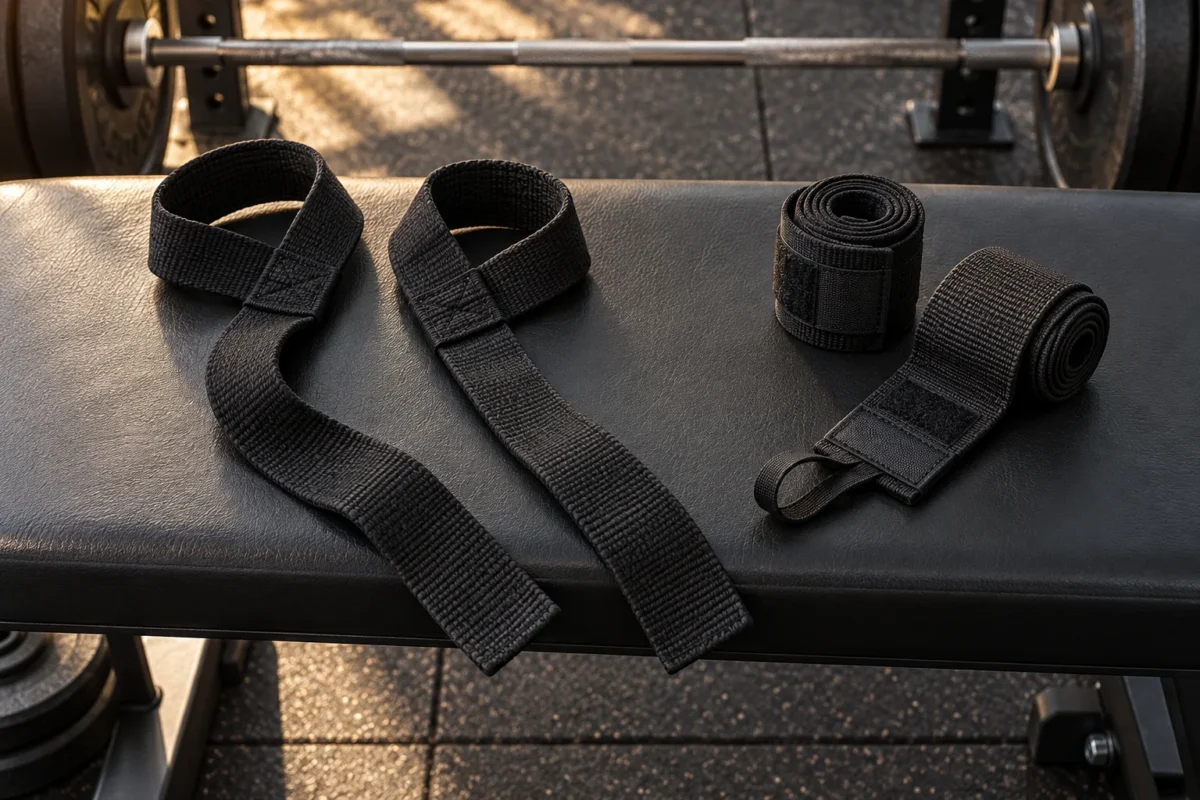
The main difference between lifting straps and wrist wraps is their purpose: straps connect your hand to a weight to assist grip, while wraps fit around the wrist to provide support. If your hands give out during rows, straps may be relevant. If you want additional wrist support during pressing, wraps are the accessory to investigate. They are not interchangeable.
Imagine your grip opening before your back is tired on a heavy row: straps may let the target muscles continue working. Now imagine your wrist bending uncomfortably under a press: straps will not solve that; wraps may help you hold a position. Check which failure happens in your own set before buying either accessory. Product names can be vague, so compare how the item actually attaches to your hand or wrist.
Lifting straps vs wrist wraps at a glance
| Question | Lifting straps | Wrist wraps |
|---|---|---|
| What do they attach to? | Usually the wrist and the bar or handle | Around the wrist itself |
| Main purpose | Assist the connection to the weight | Add wrist support |
| Common training context | Pulling exercises | Pressing exercises |
| Recognisable feature | A loop or grip section plus material connecting to the weight | A band wound around the wrist with a fastening |
| First buying question | Is grip limiting the intended exercise? | Do I want support, and have I checked my setup? |
Equipment manufacturer Eleiko makes this basic distinction in its accessory guide. Use it as a starting point, then read the instructions for the actual item. Different strap and wrap designs can require different fitting methods.
What are lifting straps?
Lifting straps provide a material connection between your wrist or hand and the bar or handle. A familiar lasso-style version has a wrist loop and a loose tail. Other designs include short loops, figure-eight straps and grip pads. They should not all be treated as the same device.
The useful buying question is whether the product suits the movement and release method you need. Look at the manufacturer's intended exercises, instructions and sizing. A design that works for one kind of pull is not automatically appropriate for every exercise with a barbell.
If you are new to straps, prioritise learning the setup over lifting more immediately. Ask a qualified coach to show you how your specific pair works. Being able to attach the straps is only part of the task; you also need to understand how to release them and what happens when you put the weight down.
What are wrist wraps?
Wrist wraps are bands fastened around the wrist. Manufacturers offer different lengths, materials and stiffness levels. A longer or stiffer wrap is not automatically the right first purchase. Think about how much support you prefer and which movements you plan to perform.
For example, SBD provides flexible and stiff versions and offers guidance on choosing between them. Rogue also describes adjustable wraps intended for several strength-training settings. These options show why the exact design matters more than a generic promise of “maximum support”.
A wrap should be fitted according to its instructions. Wearing it far up the forearm because that feels convenient can miss the intended placement. If it produces tingling or numbness, loosen or remove it. More tension is not a substitute for a sensible fit.
Choose equipment by the problem you notice
Before shopping, describe the issue in one sentence. “My fingers open before I finish my planned rowing set” points towards a grip question. “I want a more supported wrist position during bench press” points towards a wrap question. “My wrist hurts” calls for reviewing the movement and addressing the pain, rather than assuming an accessory will fix it.
The description also helps you decide whether equipment is needed at all. If you cannot control the load or your setup changes dramatically across repetitions, reducing the weight and improving the movement may be the more useful first step. Accessories are easier to assess when the rest of the exercise is consistent.
Our RIR and RPE guide helps you describe effort without relying only on whether a set felt difficult. Note what actually ended the set: target muscle fatigue, grip, position, or another limitation.
Deadlifts, rows and Romanian deadlifts
Pulling exercises are the setting where people commonly consider straps. However, decide how the accessory fits your goal. If the session is intended to train your grip under load, removing that challenge changes the task. If it is a back session and grip repeatedly ends the work early, you may want to investigate a different approach.
A practical experiment is to keep the exercise, load and repetition target familiar while you learn the equipment. Record whether your hand position, control and setup remain consistent. Do not turn the test into an excuse to jump to a weight you have never handled.
For a bodybuilding pulling session, read our back workout guide alongside the accessory decision. The workout plan should still determine your exercises and progression. Equipment can support that plan, but it does not supply one.
Bench press and overhead pressing
Pressing is where lifters often consider wrist wraps. Start by reviewing how you hold the bar, your wrist position and your ability to control the load. A wrap should not become a way to ignore a setup that repeatedly feels unstable.
When trying a pair, use your regular warm-up rather than beginning with a heavy attempt. Follow the manufacturer's placement guidance and check that both sides feel comparable. If one wrap needs repeated adjustment, inspect the fastening and your application instead of assuming your stronger side needs greater tension.
Our bench press setup guide is a useful companion. Keep the accessory trial focused: do not simultaneously change your grip width, programme, exercise selection and wrap style. A clear experiment gives you clearer feedback.
Can you use straps and wraps in the same session?
Yes, a session can include different accessories for different exercises, provided each is appropriate to the movement and used as instructed. Owning both does not mean wearing both for every set. Decide before the workout which exercise needs which item.
For example, your plan might include bench press and a rowing movement. Write a simple note beside each exercise about the equipment you intend to use. That stops a purchase from becoming an automatic habit simply because the item is already around your wrist.
Also allow time to remove, loosen or change accessories between movements. Rushed transitions can encourage sloppy setup. Keeping the items organised in separate parts of your gym bag helps you identify them quickly and check their condition before use.
What to check before buying lifting straps
Look for a clearly explained design, an appropriate size and instructions you can understand. Inspect the material, stitching, wrist contact area and any padding or grip surface. Check whether the manufacturer identifies movements where the design should not be used.
Think about the equipment in your gym. A strap intended for one bar diameter or handle arrangement may feel different on another. Do not assume a photograph of an accessory on a barbell proves compatibility with every machine handle. Ask if the product description leaves that unclear.
Release behaviour deserves special attention. Before using a new design, practise its attachment and release with unloaded equipment under suitable guidance. Avoid unfamiliar straps on fast lifts or movements where you must release the bar quickly. Read the specific instructions rather than copying a technique intended for another design.
What to check before buying wrist wraps
Compare length, stiffness, fastening and any left/right designation. Decide whether you want a lighter-feeling wrap or a more rigid construction, then check what the manufacturer says about that version. Product labels such as “professional” do not tell you whether it suits your preference.
Check the thumb-loop instructions too. Some loops help position the wrap rather than remaining loaded during the movement. Follow the particular product's guidance, including any competition-specific requirements. Avoid treating a loop as an extra way to make the wrap tighter.
Think about convenience as well as support. A fastening that is awkward for you to operate can become irritating over repeated sets. If possible, compare fit and adjustment before committing to the longest, stiffest option in a range.
Keep grip training in the plan
If grip strength matters to you, give it an explicit place in your programme rather than leaving it to chance. Record which sets are performed without assistance and which use straps. That makes it easier to see what you are actually practising over time.
Our forearm and grip workout guide provides ideas for a separate training focus. You do not need to turn every pulling set into a grip test, but you should know when grip development is a goal and when it is incidental.
The same principle applies to wrist support: review whether the accessory still serves the reason you bought it. A habit can continue long after the original problem changes. Periodically check your equipment choices against your current routine.
Care and replacement checks
Inspect straps and wraps before training. Look for damaged stitching, frayed material, worn fastening surfaces or any change that affects how the item closes. Follow the maker's washing and drying instructions; different fabrics and fasteners need different care.
Let damp equipment dry before storing it in a closed bag. Keep it away from sharp objects that can cut the material. If damage makes its condition uncertain, stop using it and ask the manufacturer about replacement. A low purchase price does not make damaged equipment worth keeping in use.
Frequently asked questions
Are wrist straps and lifting straps the same?
Often the names refer to the same grip-assistance accessory, but terminology varies. Check whether the item connects to a bar or handle. A wrist wrap is normally a different product worn around the wrist for support.
Do wrist wraps improve grip?
Their primary purpose is wrist support. If your fingers are opening during a pull, investigate grip and strap options rather than expecting a wrist wrap to act like a connection to the bar.
Do I need either accessory as a beginner?
There is no requirement to buy both. Learn the exercises, identify a specific need and get help with setup before adding unfamiliar equipment. Buying accessories is not a prerequisite for starting a useful routine.
Can wraps fix wrist pain?
Do not use wraps to train through unexplained or persistent pain. Review the exercise and seek appropriate assessment if needed. Equipment support and diagnosis are different matters.
Match the accessory to the exercise
Choose straps when you are investigating grip assistance and wraps when you want wrist support. Learn the exact design, practise with familiar loads and keep your training goal clear. If your overall routine needs structure, explore Olympian Sculpt's 12-week bodybuilding plan and check its product details before buying.
Sources and manufacturer guidance
The core accessory distinction was checked against Eleiko's straps vs wraps guide. Product-design considerations were checked against SBD lifting straps, SBD's wrap selection guidance and Rogue wrist wraps. The session-planning examples are original editorial suggestions, not comparative equipment test results.
SHOP OUR TOP GYM PRODUCTS
Powerhouse Gym Oversized T-Shirt – LYFT Pump Cover
Berserk Muscle-Fit Gym T-Shirt – Anime Workout Tee
Berserk Gym Belt – Weightlifting Belt for Men & Women
Mr Olympia Weightlifting Belt – PU Leather for Squats & Deadlifts
£45.99Original price was: £45.99.£38.99Current price is: £38.99.Kevin Levrone Uncrowned T-Shirt – Cotton Gym Pump Cover
Tren and Jerry’s T-Shirt – Funny Gym Pump Cover
Body Composition Scale with Handheld Sensor & 1.5 m Cable
£124.99Original price was: £124.99.£89.99Current price is: £89.99.Men’s Oversized Gym Pump Cover – Your Standard LYFT Tee