


Squat Depth: Find a Stable, Comfortable Range of Motion
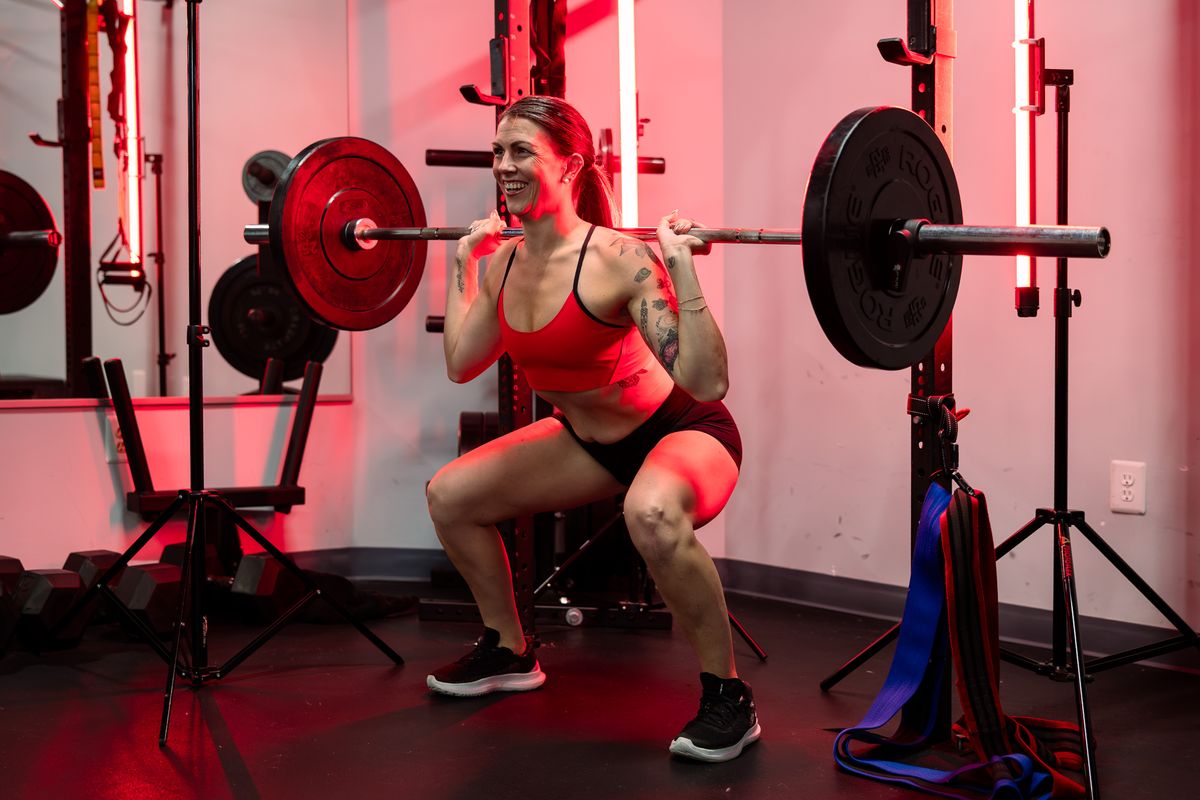
Squat as deep as you can control with a stable foot position and a comfortable, repeatable movement. Your anatomy, exercise variation and goal influence depth; forcing everyone into the same position is unhelpful.
Squat depth is one of the most argued topics in the gym. Some people insist every squat must be as deep as possible, while others deliberately stop higher. The useful answer is that depth should be appropriate for your anatomy, mobility, goal and ability to maintain control.
Troubleshoot depth one change at a time
| Observation | Try | How to judge it |
|---|---|---|
| Heels lift early | A small stance adjustment or purpose-built lifting shoe | Can the whole foot remain supported? |
| Balance is difficult | A light goblet squat or stable machine variation | Can you lower without falling forwards or backwards? |
| Position changes abruptly at the bottom | Use a slightly shallower controlled endpoint and less load | Can every repetition reach the same endpoint? |
| Pain appears at a particular depth | Stop provoking that range and seek assessment if persistent | Do not use load or a bounce to force through it |
Start with a few unweighted squats, then hold a light weight in front of your chest if it helps balance. Try small changes in stance width and toe angle. Keep the change that improves comfort and control; there is no need to adopt an extreme stance just because another lifter uses one.
A repeatable depth check
Place a stable box or bench behind you as a reference, without dropping onto it. Lower slowly until you lightly reach the chosen height, then stand. Gradually adjust the reference only if you retain control. This provides a consistent target while learning; it does not establish a universal ideal depth.
A side-angle video can reveal whether your depth changes as the set becomes harder. Compare warm-up and working sets. If extra weight causes a large loss of range, reduce it and rebuild. Do not assume every visible movement of the pelvis or spine is an injury, but avoid forcing a position you cannot tolerate.
Depth depends on the task
A competition squat has federation-specific judging rules, so competitors should check their current rulebook and coach’s guidance. A general muscle-building squat does not have to satisfy a competition standard. If a machine or split squat lets you train the intended muscles more comfortably, it can be a useful alternative.
Record the variation, footwear and approximate depth alongside load. Ten shallower repetitions are not directly comparable with ten deeper ones. Progress is easier to judge when the movement standard stays similar.
What Counts as Deep?
Squat depth describes how far the hips and knees travel during the descent. Different lifters will naturally reach different positions because of limb proportions, hip structure, ankle mobility and stance.
Depth and Muscle Growth
A deeper squat can train the lower body through a larger range of motion when it is comfortable and controlled. That does not mean forcing a depth you cannot reproduce. A consistent range is easier to progress.
Depth and Strength
Strength is specific to the range you train. If you want to improve a particular squat standard, practise the required depth. For general strength and muscle growth, choose a depth that allows good technique and progressive loading.
Foot Stance
Experiment with stance width and toe angle. Your knees should be able to move naturally over the toes rather than being forced into a rigid position.
Knees and Squat Depth
Knees travelling forward is not automatically a problem. Your knees can move forward during a squat if the movement is comfortable and controlled. Do not force them backward simply because of old gym myths.
Mobility
Ankle mobility, hip structure and footwear can all influence depth. If your heels lift or your torso position changes dramatically, experiment with stance and footwear. If discomfort persists, choose a variation that suits you.
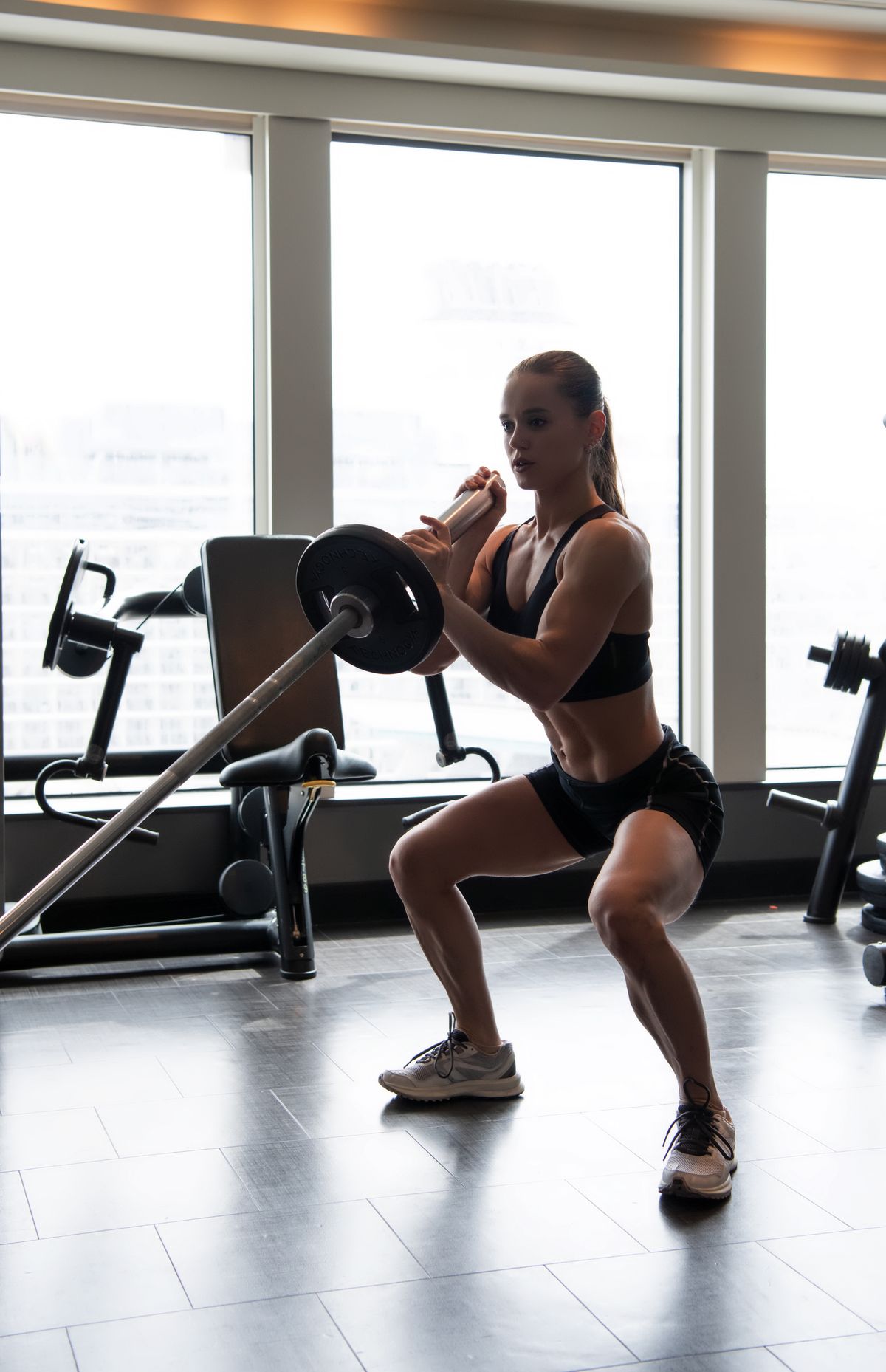
How to Practise Depth
Start with a light load and practise the same depth for several sets. Use a box or target only as a temporary reference if it helps you learn position; do not crash into it. Gradually increase the load while keeping the movement consistent.
Common Mistakes
- Forcing depth because someone online said it is mandatory.
- Cutting depth as soon as weight increases.
- Letting heels lift without addressing the cause.
- Trying to keep knees behind toes.
- Changing stance every session.
Finding Your Natural Position
Start with feet around a comfortable shoulder-width position and adjust from there. If a slightly wider stance allows your hips to move more naturally, use it. If a narrower position feels better, that can work too. Your foot angle should also allow the knees to track comfortably.
Footwear and Squat Depth
Some lifters find a raised heel helpful because it makes ankle movement easier and can support a more upright squat. Others prefer flat shoes. The right choice depends on the movement and your body. Do not assume a particular shoe will automatically fix poor technique.
Depth Under Heavy Loads
It is common for squat depth to become shallower as the weight gets heavier. If your programme requires a consistent depth, use a load you can control. There is little value in recording a heavier number if the movement has changed significantly.
When Another Squat Variation Is Better
Hack squats, front squats, goblet squats and leg presses can all train the lower body. If a back squat repeatedly feels uncomfortable, choose another movement instead of forcing it. The best bodybuilding programme is one you can perform consistently.
Practical Guide
Use a comfortable depth that matches your goal and anatomy, practise it consistently and progress gradually. If a variation allows better control, use it. A hack squat, leg press or goblet squat can all be useful parts of a bodybuilding workout.
For a complete training framework, see Olympian Sculpt.
Related guides
- Leg Day Workout: Quads, Hamstrings, Glutes and Calves
- Weightlifting Warm-Up: A Simple Set-by-Set Example
- Best Muscle-Building Exercises: Choose Your Workout Menu
Further reading: ACSM resistance-training recommendations (2026). The worked programmes here are adjustable examples, not programmes tested in that publication.
This article provides general fitness education and is not individual medical or coaching advice.
SHOP OUR TOP GYM PRODUCTS
Mr Olympia Muscle-Fit Sweatshirt – Vintage Bodybuilding Top
£33.99Original price was: £33.99.£26.99Current price is: £26.99.Mike Mentzer T-Shirt – Heavy Duty Muscle-Fit Cotton Tee
Powerhouse Gym T-Shirt – Vintage Oversized Washed Cotton
No Pain No Gain Weightlifting Belt – Heavy-Duty Support
£32.99Original price was: £32.99.£26.99Current price is: £26.99.Sam Sulek Certified Women Avoider T-Shirt – Cotton Gym Tee
Berserk Muscle-Fit Gym T-Shirt – Anime Workout Tee
Joe Weider 1965 Mr Olympia T-Shirt – Oversized Pump Cover
£30.99Original price was: £30.99.£21.99Current price is: £21.99.Muscle Duke Gym Belt – Powerlifting Belt for Men and Women