

How to Build a V-Taper: Back and Shoulder Training Plan
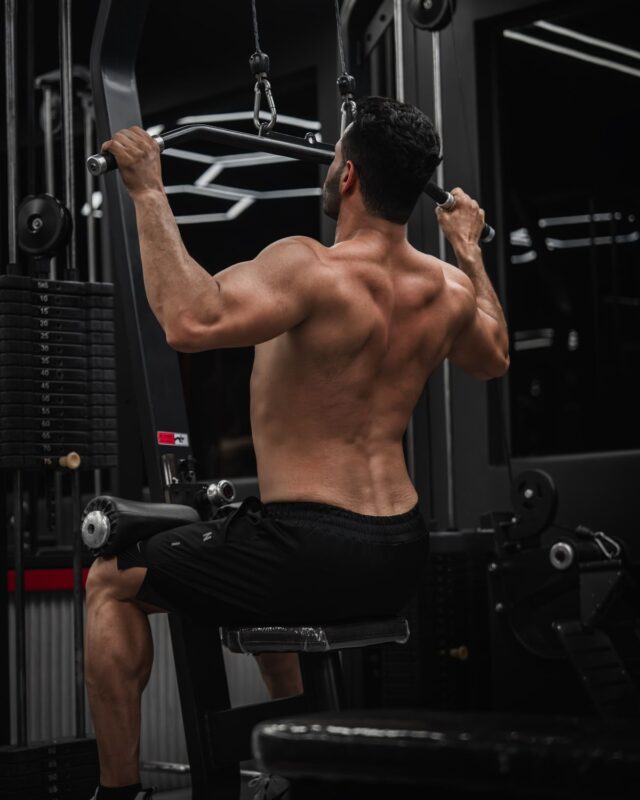
Building a V-taper means developing more visible width through the lats and shoulders while considering how your waist appears. You can train those muscles, but you cannot change your bone structure or choose where your body loses fat. The useful question is which back and shoulder work you can progress consistently, rather than which exercise promises a new shape in a week.
If your back work is mostly rows and your shoulders only get pressing, start by adding a vertical pull and a lateral raise you can progress. Keep your existing leg and core training instead of stripping it away for an illusion of a narrower waist. The look develops from a wider upper body and your overall body composition; it does not appear because you found a special exercise with “V-taper” in its name.
How to build a V-taper without neglecting the rest of your body
Give the lats and side delts a clear place in the programme, but keep pressing, lower-body training and trunk work. A visual emphasis does not require removing whole muscle groups from your routine.
Start by reviewing your existing sessions. If you already perform several rows, pulldowns and lateral raises, you may need better progression or a clearer exercise order rather than more volume. Adding a second complete back programme on top can reduce quality through fatigue.
Choose a small set of movements you can repeat and record. A vertical pull, a supported row and a lateral raise cover useful tasks for this goal. Add other work only when it fits the rest of the week. The aim is an organised emphasis, not a collection of every exercise associated with a wide back.
What affects the shape you see
The lats contribute to the width of the torso, while shoulder development influences the upper outline. Waist appearance depends on anatomy, body fat, posture, clothing and even the conditions in which you take a photo.
Clavicle width and muscle insertion points are not things an exercise can redesign. This does not make training pointless; it means your most useful comparison is with your own earlier condition. Someone else’s pose and lighting are poor tools for judging your progress.
Set goals you can influence, such as stronger controlled pulldowns, more consistent lateral-raise training and a sustainable nutrition routine. Use appearance as one optional outcome rather than the only measure of success. A more developed physique does not need to reproduce a particular influencer’s proportions to represent meaningful progress.
Choose a vertical pull you can control
Pull-ups, assisted pull-ups and lat pulldowns are options. Choose the version that lets you use a comfortable range without swinging or straining to reach a fixed repetition target. Assistance is a way to scale the exercise, not an admission that it does not count.
For pulldowns, adjust the thigh pad, take a comfortable grip and pull the handle towards the upper chest without a large backwards heave. Let the arms rise under control. Do not force an excessively wide grip or pull behind the neck simply to make the exercise look more specialised.
For pull-ups, use a secure bar and manage the lowering phase. If you cannot yet repeat controlled repetitions, use assistance or follow our first pull-up guide. Keep the variation stable long enough to see whether you are improving.
Use rows for a stronger, more developed back
A supported row can complement vertical pulling while reducing the demand of holding a bent-over posture. Use a chest-supported machine, incline bench or another suitable stable setup. Pull smoothly and avoid turning the repetition into a torso lift.
Your elbow path influences the movement, but there is no single angle that isolates the entire back perfectly. A comfortable path with controlled shoulder movement is a good starting point. Do not pin the shoulder blades rigidly together throughout every phase.
Track the row separately from the pulldown. Improvements in one do not automatically mean the other should use more weight. Our back workout guide explains how to combine pulling movements without unnecessary duplication. If the same muscles and grip are exhausted before the second exercise begins, review set volume and order.
Train the side delts with repeatable lateral raises
Choose dumbbells, cables or a suitable machine based on comfort and availability. Raise the upper arms out to the sides through a range you can control, using a small elbow bend where comfortable. Avoid throwing the weights up with the legs and torso.
The load may look modest compared with a press, which is normal for the task. Do not force a large weight jump simply because another lifter uses heavier dumbbells. Your range, leverage and execution determine what that number means.
Use a moderate-to-higher repetition range such as 12–20 as a practical starting choice. Stop when another controlled repetition is unlikely. You do not need to exaggerate the burn with endless partials. Our shoulder workout guide covers how lateral raises fit alongside pressing and rear-delt work.
A two-session emphasis plan
Use these sessions as part of your existing upper-body days. The rows and pulldowns should replace equivalent work already in the plan where appropriate. Start with fewer sets if the movements are new or your current workload is high.
| Session | Exercise | Sets and reps |
|---|---|---|
| A | Lat pulldown or assisted pull-up | 3 × 8–12 |
| A | Chest-supported row | 2 × 8–12 |
| A | Lateral raise | 2 × 12–20 |
| B | Comfortable vertical pull | 2 × 8–12 |
| B | Supported row | 2 × 10–15 |
| B | Lateral raise | 2–3 × 12–20 |
Allow recovery between sessions. Rest enough to repeat the intended movement, especially for the heavier pulls. Keep other necessary training in the week, and do not assume that adding this table to a demanding six-day routine is automatically manageable.
Progress the emphasis instead of constantly adding exercises
Keep the resistance stable while building repetitions within the target range. When all planned sets reach the upper target with comparable effort and control, try a small increase. Record machine settings and assistance levels as well as weight.
For example, a lateral raise may move from 15 and 13 repetitions to 17 and 15 over several exposures. You do not need to rush to the next pair of dumbbells before the current load is well controlled. The exact pace will vary.
Use the progression guide for handling large increments. If a lift stalls while others improve, investigate that lift’s setup and loading options before adding a whole extra workout. A narrower exercise menu with clear progression is easier to assess than constant novelty.
What to do about waist appearance
Abdominal exercises cannot selectively remove fat from the waist. If fat loss is appropriate for your situation, the relevant process involves overall nutrition and activity while preserving productive resistance training. A smaller waist is not achieved by finding a special side-bend substitute.
Do not avoid all core work out of fear that any abdominal development will ruin your proportions. Choose a manageable amount that supports your training goals. Our core workout offers a simple starting structure.
If you are already lean and want more muscle, repeatedly dieting harder can work against the development you want. Decide whether muscle gain, fat loss or maintenance is the current priority. The body recomposition guide helps explain the trade-offs without promising that every goal can advance at the fastest possible pace simultaneously.
Track progress without chasing a camera angle
Keep a training log first. It gives you information about attendance, repetitions and load that does not depend on lighting. Add photos or measurements only if they help you evaluate the goal calmly.
For photos, use the same distance, lighting and relaxed position. A dramatic lat spread after training is not comparable with an unposed morning photo. Similarly, clothing cut can make the shoulders look wider without any physical change.
Review over a meaningful block of consistent training. If pulling and shoulder exercises are improving and recovery is good, keep the plan stable. If progress is poor across the whole programme, examine food, sleep and total volume before adding more specialisation. Take a longer view of appearance than of exercise skill; the two do not change at identical speeds.
Common V-taper questions
Do I need an extremely wide pulldown grip?
No. Choose a grip that permits a comfortable, controlled range. Wider is not automatically better, and a forced position can make progression harder.
Should I stop training traps?
There is no general need to remove trap work to create a V-taper. Balance the programme around your goals and the work already supplied by pulling exercises.
Can I do this at home?
Rows and lateral raises are possible with suitable dumbbells. Vertical pulling needs appropriate equipment, such as a safely installed bar. Our dumbbell plan explains the options and limitations.
What should I change first?
Audit your current weekly back and shoulder work. Pick one vertical pull, one row and one lateral-raise variation to track consistently. Keep the rest of your body trained, choose a clear nutrition goal and review the result before adding more exercises.
If time is limited, prioritise the movement most relevant to your current weakness at the start of the session, then retain a balanced minimum of other work. A temporary emphasis should have a review date so it does not quietly turn into permanent neglect of pressing, legs or recovery.
SHOP OUR TOP GYM PRODUCTS
Berserk Gym Belt – Weightlifting Belt for Men & Women
Kevin Levrone Uncrowned T-Shirt – Cotton Gym Pump Cover
Tren and Jerry’s T-Shirt – Funny Gym Pump Cover
Mike Mentzer T-Shirt – Heavy Duty Muscle-Fit Cotton Tee
Powerhouse Gym Oversized T-Shirt – LYFT Pump Cover
Yujiro Hanma Gym Hoodie – Oversized Anime Pump Cover
£32.99Original price was: £32.99.£23.99Current price is: £23.99.Powerhouse Gym Cap – Classic Denim Unisex Bodybuilding Hat
£26.99Original price was: £26.99.£15.99Current price is: £15.99.Mr Olympia Amateur Korea T-Shirt – Oversized Cotton Tee