




Body Recomposition: Build Muscle and Lose Fat Together
Body recomposition means increasing muscle while reducing body fat. It can happen, but the pace and likelihood depend on your starting point, training history and consistency. A stable scale weight can accompany useful progress, although it does not prove that recomposition is happening.
A person can keep the same scale weight for a month while their training improves, yet a single smart-scale muscle reading cannot prove what changed. Compare several weeks of strength, waist measurements, photographs taken under similar conditions and body-weight trends. If all of those stall, revisit the training and food plan. If one measure moves while another does not, avoid declaring the whole approach a failure from one number.
Who is body recomposition most useful for?
Beginners, people returning after time away and those who can improve an inconsistent training or eating pattern often have room to make progress without a large deliberate bulk. An experienced, already lean lifter may find simultaneous muscle gain and fat loss slower and less predictable.
The distinction matters because a strategy can be possible without being the fastest route to every goal. If maximising muscle gain is the overriding priority, a carefully managed gaining phase may fit better. If losing body fat is the main priority, a manageable deficit with muscle-preserving training may be clearer.
Choose based on your present goal, not the appeal of achieving everything at once. Recomposition is especially useful as a framework when you want better strength, a smaller waist and more consistent habits without chasing rapid scale changes. It is not a promise that you can ignore food intake or recovery.
What the evidence shows, and what it does not
A 2016 controlled trial by Longland and colleagues showed that lean-mass gain and fat loss could occur together during a short, demanding exercise and dietary intervention, with a higher-protein group achieving better outcomes. That specific study does not predict what an ordinary gym programme will produce for you.
Lean mass is also not identical to newly built muscle tissue in every measurement. Water and other components affect body-composition estimates. Avoid treating a short-term change on a device as proof of a large muscle gain.
The practical lesson is to use a sound training and nutrition process, then assess your own trends cautiously. Research can establish that an outcome is possible while leaving substantial uncertainty about an individual’s pace, ideal intake and response.
Choose calories around the main priority
If fat loss is the clearer priority, a modest deficit may be appropriate. If you are already relatively lean and mainly want better training performance, starting near maintenance can make more sense. Do not choose a severe deficit simply because the phrase includes losing fat.
Estimate maintenance from a reasonably consistent period of eating and body-weight readings. A calculator is only a first guess. Changes in steps, work and cardio can alter the result even when your meal plan stays the same.
Make small adjustments and review several weeks of data. If weight is falling rapidly while performance and recovery deteriorate, reconsider the size of the deficit. If nothing changes and fat loss is important, check consistency before making a further adjustment. Our calorie guide explains how to treat the number as an estimate you update rather than a fixed truth.
Set a practical protein routine
For many healthy adults doing resistance training, around 1.6–2.2 g of protein per kilogram of body weight per day is a practical range to discuss and adapt. It is not an instruction to maximise intake regardless of your medical history or food preferences.
For an illustrative 75 kg person, that range is about 120–165 g daily. This arithmetic gives context, not a personalised prescription. If using body weight produces an impractical target, or a health condition affects protein needs, get individual dietary guidance.
Spread protein-containing foods through meals you can repeat: yoghurt or an alternative at breakfast, beans or chicken at lunch, tofu or fish at dinner, for example. Powder is optional. Our protein guide covers portions and meal examples. Keep fruit, vegetables, fibre and overall diet quality in the plan rather than organising every food choice around one nutrient.
Train for progression, not calorie punishment
Use resistance training to practise and progressively challenge the major movement patterns. A three-day full-body routine or a manageable upper/lower split can work as an organisational framework. Choose the one you can attend consistently.
Keep the main exercises stable long enough to compare performance. Record load, repetitions, working sets and effort. Adding one controlled repetition is useful information; rushing through a circuit until you feel exhausted is less informative about strength or muscle development.
Our three-day full-body workout provides an example schedule. You do not need to turn every session into a test of failure. A programme that is hard enough to challenge you but manageable enough to repeat is more useful than alternating heroic workouts with missed sessions.
Use cardio and daily activity deliberately
Keep aerobic activity for fitness and health, and account for its demands. Walking, cycling or another activity you enjoy can fit around lifting. Begin from your current baseline rather than adding a large amount of unfamiliar work immediately.
A consistent step pattern can make food adjustments easier to interpret. If one week involves long walks and the next is entirely desk-bound, identical calories may produce different weight trends. You do not need an arbitrary step target, but you should understand the variation.
Use the cardio and muscle-building guide for scheduling examples. Avoid using cardio as punishment for a meal. It works better as planned activity that serves your goals and fits your recovery. If fatigue rises, review the combined workload before deciding that the answer is more exercise.
Track four indicators instead of trusting one number
Use a small set of measures under consistent conditions. None independently proves recomposition, but their combined direction can support a more useful interpretation.
| Indicator | How to use it | Limitation |
|---|---|---|
| Average body weight | Compare several similar morning readings | Water and food weight fluctuate |
| Waist measurement | Use the same location and conditions | Technique and digestion affect it |
| Training log | Compare controlled sets over weeks | Skill can improve without equal muscle gain |
| Optional photos | Keep lighting, distance and pose similar | Appearance is subjective |
Use photos only if they help rather than worsen your relationship with your body. You can assess health and training habits without regular physique pictures. The best tracking system is one you can use calmly and consistently.
Worked example: stable weight with a smaller waist
Imagine a lifter whose average weight remains around 80 kg over several weeks. Their waist measurement trends down under consistent conditions, and their controlled squat and row performance improve. That pattern is compatible with useful body-composition change, although it does not precisely quantify muscle gained or fat lost.
The sensible response may be to keep the plan stable. Cutting food aggressively because the scale has not fallen could disrupt a process that is already serving the goal.
Now imagine the same stable weight with unchanged measurements, irregular attendance and no progression records. That does not provide evidence of recomposition. The first task is improving consistency and measurement, not declaring the method successful. These are illustrative scenarios, not client case studies or observed results from this programme.
When to change course
Review after a period of consistent implementation, not after three days. If several weeks show no useful change, decide which outcome matters most. You may need a clearer fat-loss phase, a modest gaining phase or a better-designed training routine.
Check the basics before adjusting calories. Were the sessions completed? Were meal portions and activity reasonably stable? Did illness, travel or poor sleep disrupt the period? An inconsistent trial cannot tell you much about the strategy.
If muscle gain is now the priority, our lean-bulk guide explains a restrained surplus and review process. If fat loss is the priority, use our muscle-preserving fat-loss guide. Changing the plan to match a clearer goal is a reasonable decision, not evidence that you failed at recomposition.
Common mistakes and frequently asked questions
How long does recomposition take?
There is no fixed timeline. Use weeks to review habits and trends, and allow longer for meaningful physique changes. Starting point and training history strongly affect what is realistic.
Can a smart scale confirm it?
Not reliably from small short-term changes. Hydration and device assumptions affect body-fat estimates. Use the reading as limited context rather than a precise muscle-gain report.
Should I alternate high and low calories every day?
You can organise food around training if that helps, but a complicated cycling system is not required. Consistent average intake and a manageable routine are easier to evaluate.
What should my first fortnight focus on?
Complete planned sessions, establish repeatable meals and collect a baseline without rushing to change it. Write down your main priority and choose measures that reflect it. Avoid adding new supplements, cardio sessions and severe food rules simultaneously; you will lose track of what is helping.
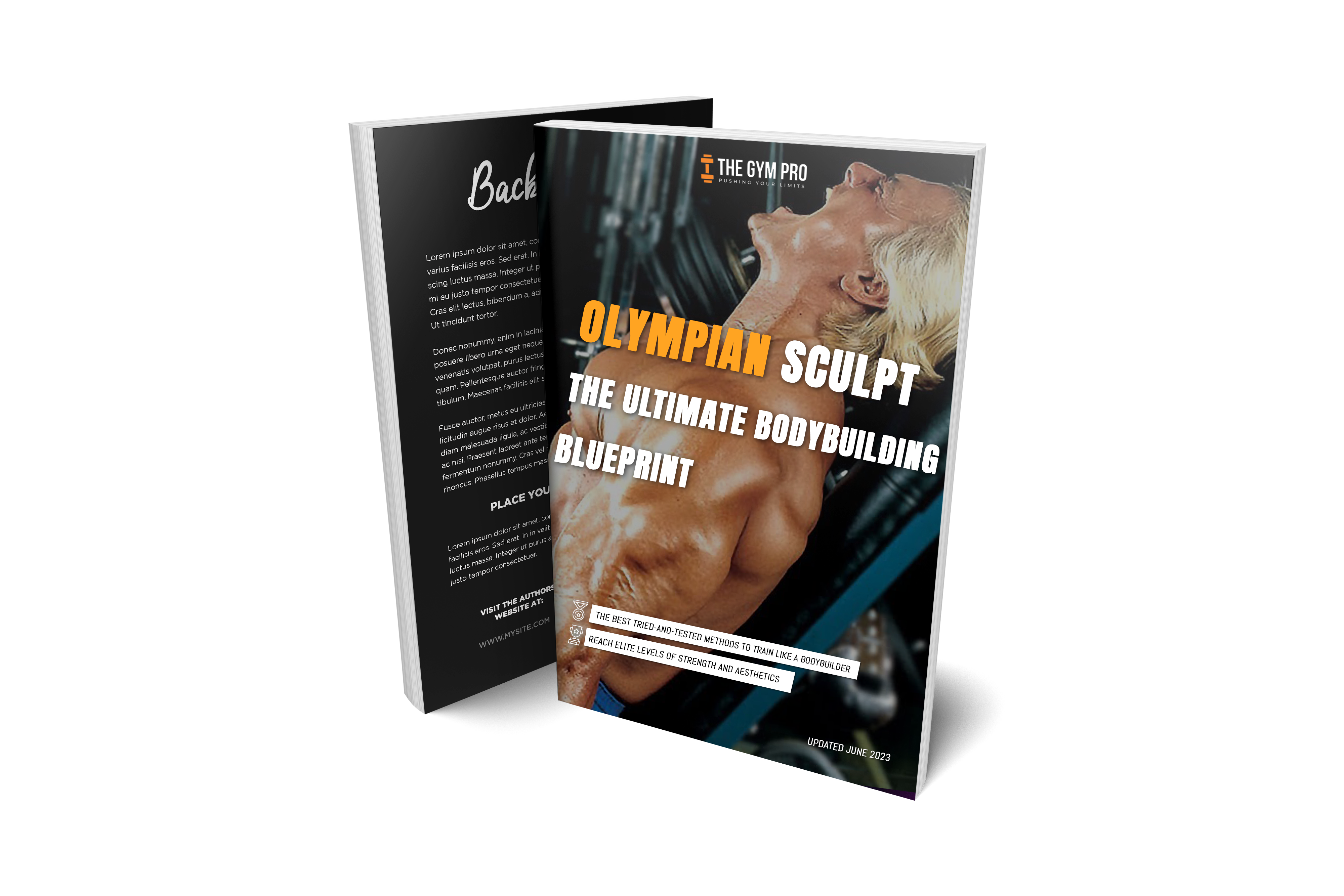
If you want a structured training resource, Olympian Sculpt is an optional plan to review against your experience and equipment. No e-book can guarantee simultaneous muscle gain and fat loss, and the daily process remains more important than the product you choose.
SHOP OUR TOP GYM PRODUCTS
Tren and Jerry’s T-Shirt – Funny Gym Pump Cover
Mr Olympia Weightlifting Belt – PU Leather for Squats & Deadlifts
£45.99Original price was: £45.99.£38.99Current price is: £38.99.Ronnie Coleman Gym Merch – Legalize Tren Cotton T-Shirt
Barbell Brigade Pump Cover – Bronze & Red Gym T-Shirt
Berserk Muscle-Fit Gym T-Shirt – Anime Workout Tee
Dorian Yates Bodybuilding Oversized Gym T-Shirt
Samurai Weightlifting Belt – Japanese Calligraphy Gym Belt
Joe Weider 1965 Mr Olympia T-Shirt – Oversized Pump Cover
£30.99Original price was: £30.99.£21.99Current price is: £21.99.