



Best Rep Range for Muscle Growth: How to Choose Yours
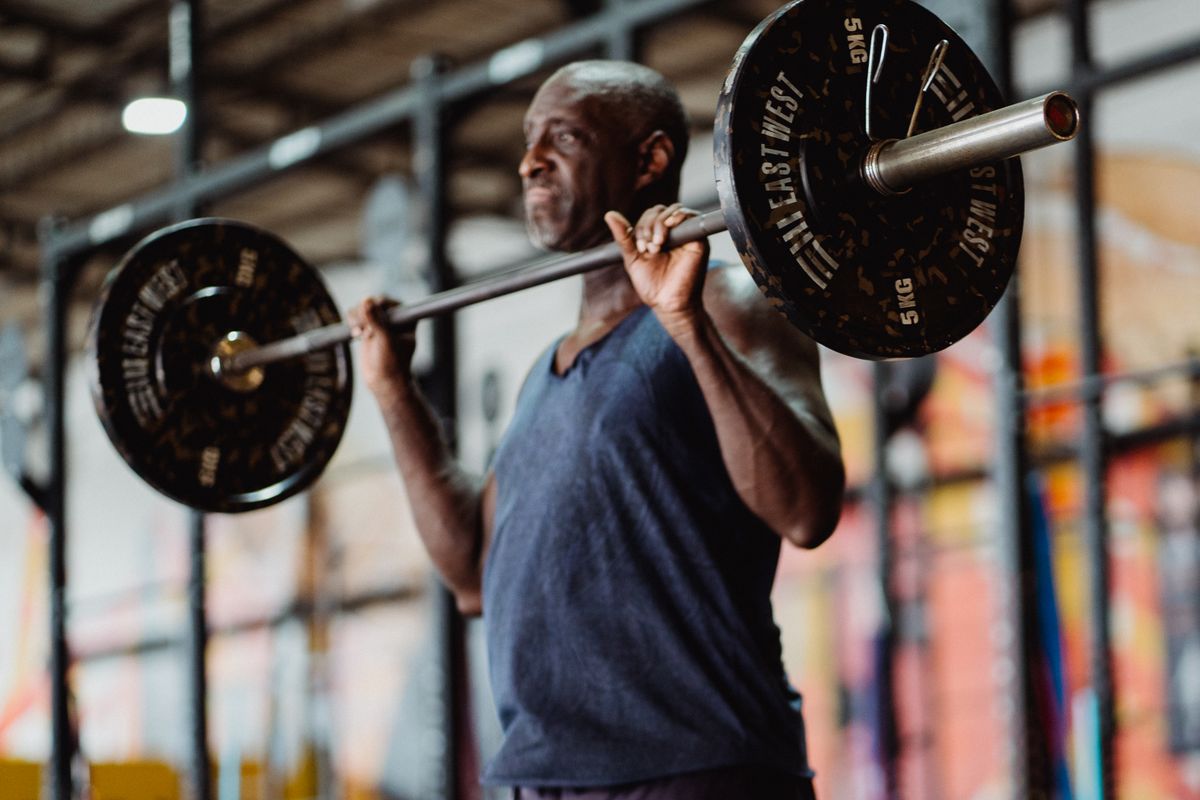
There is no single best rep range for muscle growth that suits every exercise and lifter. A practical approach is to use moderate repetitions for many compound movements and somewhat higher ranges for smaller exercises, while keeping sets challenging and technique consistent.
Suppose you can do a controlled set of eight squats but a set of eight lateral raises makes you swing the weights. Those exercises do not need the same rep target. Choose a range that lets you keep the movement honest, finish near a challenging effort and repeat the test next week. When you reach the top of that range with the same form, add a little load and build back up.
Best rep range for muscle growth: practical starting ranges
The table gives options to test, not biological boundaries. Your preferred range may differ because of equipment increments, comfort and the way a particular exercise feels.
| Exercise type | Practical starting range | Reason to consider it |
|---|---|---|
| Demanding compound lift | 6–10 or 8–12 reps | Manageable balance of load and repeated effort |
| Machine press or row | 8–15 reps | Stable setup and straightforward progression |
| Curl or triceps exercise | 10–15 or 10–20 reps | Smaller load increments can be easier to manage |
| Lateral raise or calf raise | 12–20 reps | Useful room to progress without forcing heavy jumps |
These ranges overlap because exercise selection is not a rigid classification system. Start with a range that lets you perform controlled, challenging sets and keep it stable long enough to learn from it.
What the research means for everyday training
A 2017 systematic review and meta-analysis comparing lower and higher loads found similar hypertrophy outcomes across the studied loading conditions when sets were taken to failure, while heavier loading favoured maximal strength. That does not mean every load, effort level or exercise produces identical results.
The distinction between muscle growth and strength testing matters. If you want to improve a heavy single repetition, practising heavier lifting has a specific role. If muscle development is the main target, you have more flexibility in the repetition ranges you use.
Do not turn flexibility into randomness. A planned range provides a consistent task to progress. The useful takeaway is that you can choose a workable range around the exercise rather than believing muscle only grows when a set ends on repetition ten.
Lower repetitions: useful, but with trade-offs
Lower-repetition sets allow heavier loads and can fit strength-focused compound work. They may suit someone who enjoys heavy lifting and can maintain technique under that demand. They are not automatically necessary for every exercise in a bodybuilding routine.
Heavy sets often need longer rests and a careful setup. A small technical mistake can also be harder to manage when the load is close to your limit. That does not make heavy training inherently wrong; it makes context and preparation important.
If you use lower repetitions, keep them attached to a clear purpose. For example, a heavier press early in the week can coexist with a moderate-repetition machine press later. Avoid forcing very heavy lateral raises or wrist curls simply because lower repetitions are useful on a different exercise.
Higher repetitions: more than a definition workout
Higher repetitions can make lighter equipment useful and may suit stable isolation exercises. They do not automatically produce definition or selectively burn fat from the trained area. Changes in appearance depend on more than the number printed beside an exercise.
The main practical limitation is what ends the set. Breathing, discomfort or loss of concentration can become the limiting factor before the intended muscle is sufficiently challenged. This is especially relevant for long sets of demanding whole-body movements.
If a high-repetition set is difficult to assess, choose a somewhat lower range or a more stable exercise. You do not need to prove that thirty repetitions work on paper by using them for every squat set. Select the version that lets you apply effort, preserve control and repeat the task consistently.
Effort changes the meaning of the repetition count
Ten repetitions can be easy or extremely hard depending on the load and your current ability. The repetition number alone does not describe the stimulus. A set stopped with many repetitions available is a different task from one close to its limit.
For many working sets, leaving roughly one to three clean repetitions in reserve is a useful practical target once you can judge effort reasonably well. Beginners may need a more conservative start while learning the movement. This is an organisational choice, not a universal requirement.
Use our RIR and RPE guide to connect the repetition range with effort. If you deliberately change how close to failure you train, record that change. Otherwise you may interpret an easier set as lost strength or a maximal set as ordinary progress.
Match the range to the equipment
A dumbbell jump from 8 kg to 10 kg is a large percentage change. A wider repetition range can make that equipment easier to use productively. You may need more time at the lighter weight before the next pair becomes manageable.
A cable stack with small increments can allow a narrower progression pattern, while a machine with large jumps may need the same flexibility as dumbbells. Do not compare load numbers between different machines as though their resistance is identical.
Choose a range that survives the equipment you actually have. If every increase immediately forces poor technique, the progression rule is too rigid. Our dumbbell-only plan shows how to use ranges across a complete programme rather than inventing a new rule for every session.
A worked double-progression example
Suppose you choose three sets of 8–12 repetitions for a chest-supported row. Keep the load stable and try to improve the repetitions while preserving the same range and approximate effort. Only increase the load when the upper target is repeatable across the planned sets.
| Exposure | Reps at the same load | Decision |
|---|---|---|
| 1 | 10 / 9 / 8 | Keep weight |
| 2 | 11 / 10 / 9 | Keep weight |
| Later | 12 / 12 / 12 | Try the smallest suitable increase |
| After increase | 9 / 8 / 8 | Build repetitions again |
The sequence illustrates a method, not the speed you should expect. If the new load drops you below the range or changes the movement, reduce it. Our progressive overload guide explains how to handle those decisions without forcing weekly increases.
Rest and weekly sets still matter
A chosen rep range becomes less useful if rest changes dramatically between sessions. If you cut a three-minute rest to thirty seconds, fewer repetitions do not necessarily mean you became weaker. Keep enough consistency to interpret the log.
Take the time needed to repeat high-quality work, particularly for demanding compounds. Smaller exercises may need less, but the clock should serve the task rather than become a competition to finish fastest.
Also look at weekly volume. A perfect-sounding range cannot rescue a programme with inconsistent attendance or more sets than you recover from. Our weekly set guide and rest guide cover those separate choices. Change one variable at a time when investigating a stall so you can identify which adjustment helped.
When to change your rep range
Keep a range while it remains comfortable and productive. Consider a change if the equipment makes progression awkward, the set is repeatedly limited by breathing rather than the target task, or your current training goal has changed.
For example, moving a lateral raise from 8–10 to 12–20 repetitions may make a modest dumbbell load easier to progress without swinging. Moving a very long squat set to a moderate range may make effort easier to judge. These are practical examples, not claims that one range is universally superior.
Establish a new baseline when you change. Do not interpret a lower weight in a higher range as lost progress. You have changed the task. Keep the new approach for enough comparable sessions to evaluate it, unless discomfort or another clear problem requires an earlier adjustment.
Rep-range myths and your next workout
Do high reps tone and low reps bulk?
No. Those labels oversimplify how training and body composition affect appearance. Use ranges for practical programming, not as separate switches for definition and size.
Should every set reach failure?
No. How close you train to failure is a separate decision that should account for exercise, experience and recovery. Our failure-training guide explains the trade-offs.
Can I mix ranges in one workout?
Yes. A moderate-repetition press and higher-repetition lateral raise can fit naturally in the same session. You do not need one number for every muscle and movement.
What should I do next?
Choose a clear range for each main exercise, note the intended effort and use the same progression rule for the next several exposures. Review the log before changing the plan. The best range for your programme is one that supports controlled, challenging work you can measure and repeat.
Before the next session, write both the lower and upper target beside each exercise. A note that says only “three sets” leaves the progression decision unclear. Include the approximate effort you intend and the smallest available weight increase. After training, record whether the final repetitions kept the same range and control. This turns the rep range into a practical decision system instead of a number copied from a programme without a clear reason.
SHOP OUR TOP GYM PRODUCTS
Ronnie Coleman T-Shirt – Funny Bodybuilding Gym Tee
Nasser El Sonbaty Shirt – Uncrowned Mr Olympia T-Shirt
Men’s Oversized Gym Pump Cover – Your Standard LYFT Tee
Powerhouse Gym T-Shirt – Vintage Oversized Washed Cotton
Mr Olympia Hoodie – 2020 Zip-Up Bodybuilding Jacket
Ronnie Coleman Gym Merch – Legalize Tren Cotton T-Shirt
Dorian Yates Bodybuilding Oversized Gym T-Shirt
I’m Afraid of Women Gym Retro T-Shirt – Funny Bodybuilding Tee