

Heavyweight vs Lightweight Gym T-Shirts: 5 Useful Checks
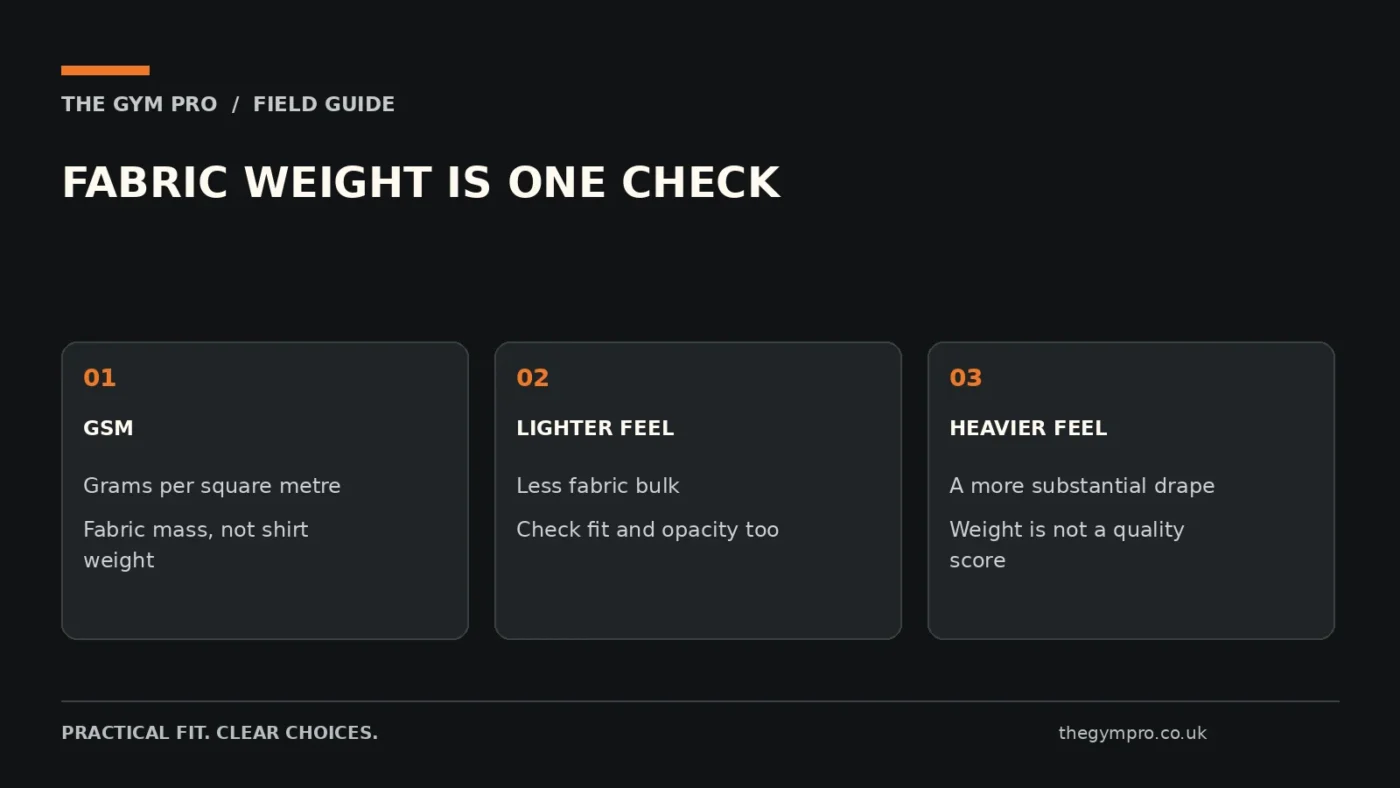
Heavyweight vs lightweight gym T-shirts is mainly a question of fabric weight, feel and how the garment drapes. A heavier tee often has a more substantial shape; a lighter tee may feel less bulky during a warm session. Neither description establishes breathability, durability or quality on its own.
Table of Contents
Heavyweight vs lightweight gym T-shirts: what changes?
Choose for the session and the silhouette you want. A structured pump cover for lifting and a light top for cardio can both be useful. You do not have to treat one fabric weight as the correct choice for every workout.
| Question | A lighter tee may suit | A heavier tee may suit |
|---|---|---|
| What feel do you prefer? | Less bulk against the body | A more substantial feel |
| What silhouette do you want? | A lighter, less structured drape | A more structured relaxed shape |
| How warm is the session? | A warm room or more sustained activity | Cooler conditions or a preferred lifting layer |
| What must still be checked? | Opacity, seams, fabric and fit | Fabric, fit, comfort and care |
| What is not guaranteed? | Fast drying or cooling | Durability, opacity or premium quality |
These are useful starting questions, not performance ratings. Two garments of the same weight can behave differently because the fibres, knit and construction differ.
What GSM means on a gym T-shirt
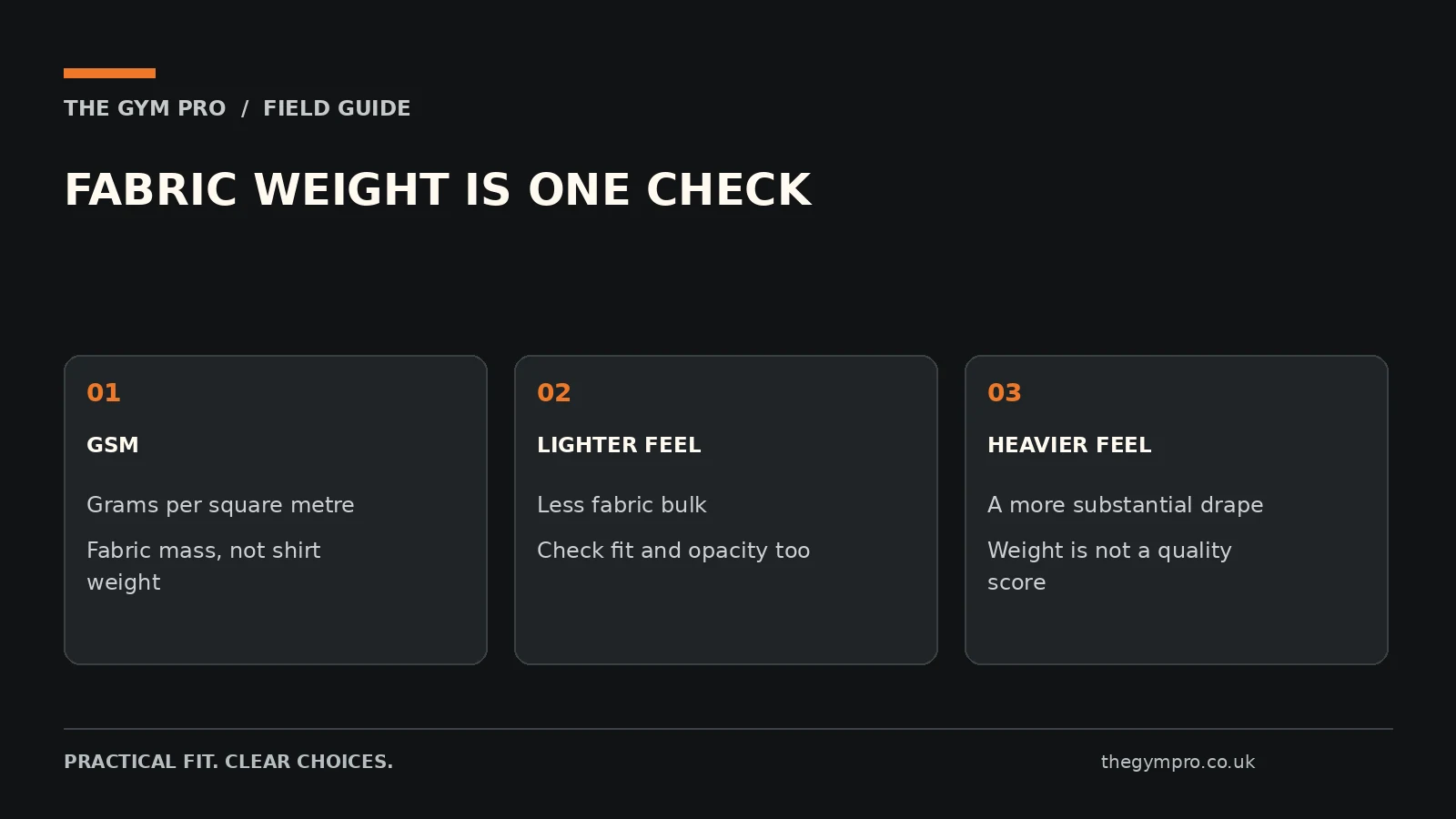
GSM means grams per square metre. It describes the mass of a given area of fabric, not the finished weight of the whole shirt. A 240 GSM fabric weighs 240 grams for each square metre before it is made into a garment.
That distinction matters when comparing different sizes or cuts. An oversized shirt uses more fabric than a close-fitting shirt of the same size label. The finished garment can therefore weigh more even if both use fabric with the same GSM.
Terms such as lightweight and heavyweight do not have one universal boundary across every retailer. Where GSM is supplied, compare the number alongside the fibre blend and garment measurements. Where it is missing, ask the seller rather than estimating from a photograph.
Do not invent a GSM value for a shirt because it looks thick. Washed finishes, lighting and styling can change its appearance. Our product pages should be read for the specifications actually provided, without treating this guide as a statement of a particular product’s weight.
Check 1: separate fabric weight from fibre blend
Cotton, polyester and blended fabrics can all be made in different weights and constructions. The fibre name and the GSM answer different questions. One describes what the fabric contains; the other describes the mass per area.
Our cotton versus polyester gym-clothes guide explains that material comparison in more detail. For this decision, start with how your current garments feel during the activities you do most often.
If a shirt repeatedly feels too warm, check weight, fit and construction together. Buying the same cut in a different fibre may not solve the problem. Equally, a lighter shirt may still feel uncomfortable if it is too tight through your shoulders.
Read care instructions before buying. A substantial cotton tee and a light technical top may require different handling. Fabric weight is not permission to use high heat or disregard the garment label.
Heavyweight vs lightweight gym T-shirts: drape and sizing
Drape is how the fabric hangs. A heavier fabric may hold a boxier shape, which can suit an oversized bodybuilding tee. A lighter one may fall closer to the body. The pattern and finishing matter as well, so judge the complete garment.
Lay a familiar tee flat and record chest width, shoulder width if useful, body length and sleeve shape. Compare those figures with the listing. An oversized cut is a design choice; heavyweight is a fabric description. They are not interchangeable.
Our pump-cover fit guide helps with the silhouette, while the T-shirt measurement guide shows how to make a useful comparison.
When trying a garment, reach overhead, sit down and move your arms through familiar positions. Check whether the fabric bunches around your neck or under your arms. A good-looking drape while standing does not settle how the shirt will feel on a bench.
Checks 4 and 5: choose for the session and care routine
For lifting in a cooler room, a substantial relaxed tee may be comfortable throughout the session. For longer cardio or a warm gym, you may prefer a lighter option. Use your own experience rather than a claim that heavier fabric automatically trains better.
If you wear a top as a removable warm-up layer, judge it differently from the shirt underneath. You may enjoy the structure of a heavier garment for arrival and warm-up but prefer less bulk for the main session.
Consider laundry frequency too. Read the label, allow garments to dry fully and avoid storing damp kit in a closed bag. Our printed gym T-shirt washing guide explains ways to protect graphics without assuming every print uses the same process.
When browsing The Gym Pro’s gym T-shirts, use the supplied blend, chart and images to choose a shortlist. If a performance claim or fabric-weight number is absent, ask before ordering. A guide to fabric weight cannot verify an unspecified feature.
A GSM example using equal areas of fabric
Imagine two one-square-metre fabric samples. At 180 GSM, the first sample has a mass of 180 grams. At 240 GSM, the second has a mass of 240 grams. The difference is 60 grams for the same area. This example explains the unit; it does not establish how heavy a finished shirt will be, how quickly it will dry or whether either fabric is better made.
In a heavyweight vs lightweight gym T-shirts comparison, the complete garment adds another variable: how much fabric the pattern uses. An oversized cut may use more fabric than a close cut, and seams, trims and finishes also contribute to the finished item. Ask for both the fabric specification and the garment measurements if those details matter to you. Do not turn a fabric-weight number into an unsupported claim about performance.
Questions about heavyweight gym tees
Does heavyweight mean better quality?
No. Fabric weight is one specification. Stitching, construction, fabric consistency and how the garment meets your needs all matter. A heavier shirt is not automatically a better-made shirt.
Is a heavyweight T-shirt always more opaque?
No. Knit, colour, stretch and construction affect what shows through. Assess the actual garment under suitable lighting. Do not use GSM as a guarantee of coverage.
Is a pump cover always heavyweight?
No. Pump cover describes how a garment is used or styled, usually with a relaxed fit. It does not establish a particular fibre blend or fabric weight.
Which should I choose: heavyweight vs lightweight gym T-shirts?
Choose the feel, cut and comfort that suit the session. If you want both a structured lifting tee and a light cardio top, a small rotation can be more useful than expecting one shirt to do everything.
As a concrete example of a retailer publishing a fabric-weight specification, Before I Go lists a 220 GSM cotton T-shirt. That number describes that garment’s fabric; it is not a universal threshold or a specification for The Gym Pro products.
SHOP OUR TOP GYM PRODUCTS
Nasser El Sonbaty Shirt – Uncrowned Mr Olympia T-Shirt
Powerhouse Gym Oversized T-Shirt – LYFT Pump Cover
Dorian Yates Bodybuilding Oversized Gym T-Shirt
Smart Body Composition Scale – Bluetooth LCD Fitness Tracker
£38.99Original price was: £38.99.£29.99Current price is: £29.99.Mr Olympia Amateur Korea T-Shirt – Oversized Cotton Tee
Sam Sulek Certified Women Avoider T-Shirt – Cotton Gym Tee
Kevin Levrone Uncrowned T-Shirt – Cotton Gym Pump Cover
Loose Bodybuilding Trousers – Hardcore Gym Workout Pants