

Weightlifting Belts for Women: Fit, Width and Buying Checks
A belt sold as “women’s” is not automatically a better fit, and a unisex belt is not automatically too bulky. What matters is how its length and width work with your torso, how the closure feels, and whether you can breathe and brace comfortably. If you are looking for a weightlifting belt for women, measure and test those things before worrying about the label.
This guide is about selecting equipment, not prescribing a medical support. A lifting belt is an optional training tool; it does not replace learning to brace or lifting with a load you can control.
Measure your lifting position, not your jeans
Use a flexible tape around the part of the midsection where the belt will sit when you train. This is often above the hips and below the lower ribs, but exact position can vary by exercise and body shape. Stand normally, breathe out without sucking in, and note the measurement. Compare it with the size chart on the exact product page. A trouser size is not a waist circumference at the belt’s training position.
If you are close to the edge of a size range, inspect how much adjustment remains in either direction. You want room to make the belt slightly tighter or looser for changes in clothing and comfort. Our existing belt measuring guide explains the process in more detail. Do not assume that a size “M” on two different belt styles corresponds to the same measurement.
Check the distance between ribs and hips
Two people with the same waist circumference can have very different torso lengths. A tall, straight belt may dig into a shorter torso when you set up for a deadlift. It may feel fine standing but uncomfortable at the bottom of a squat. The useful test is whether the belt permits your normal setup and gives you a firm surface to brace against.
Before buying, check the listing for actual belt width, shape and material. If a width is not stated, ask rather than assuming. Try the belt over the sort of top you normally wear and perform an unloaded squat and hinge. You should be able to take a breath into your midsection and move without the edge pinching you sharply.
Prong, lever or adjustable closure?
| Style | Consider it if… | Check before ordering |
|---|---|---|
| Prong | You want straightforward hole-by-hole adjustment | Hole spacing and usable size range |
| Lever | You prefer a quick, repeatable closure | How to change its setting and whether the fit range suits you |
| Hook-and-loop or similar adjustable style | You want quick changes between exercises | Closure condition, width and manufacturer instructions |
None of these styles is “for women” by itself. Your training, preferred feel and actual fit decide. Our lever-versus-prong guide compares the trade-offs at greater length.
A two-minute fit test before a heavy set
- Put the belt at your usual lifting position, with the closure secure.
- Take a normal breath and expand the abdomen against the belt. You should feel contact around the midsection without being unable to breathe.
- Squat or hinge with no added load. If the belt folds, slips or digs sharply, change the position or size rather than forcing it.
- Begin with warm-up loads and retest. A belt can feel different once you move under load.
Our belt tightness guide and position guide cover those specific checks. If you are new to belts, read when beginners might use one before buying.
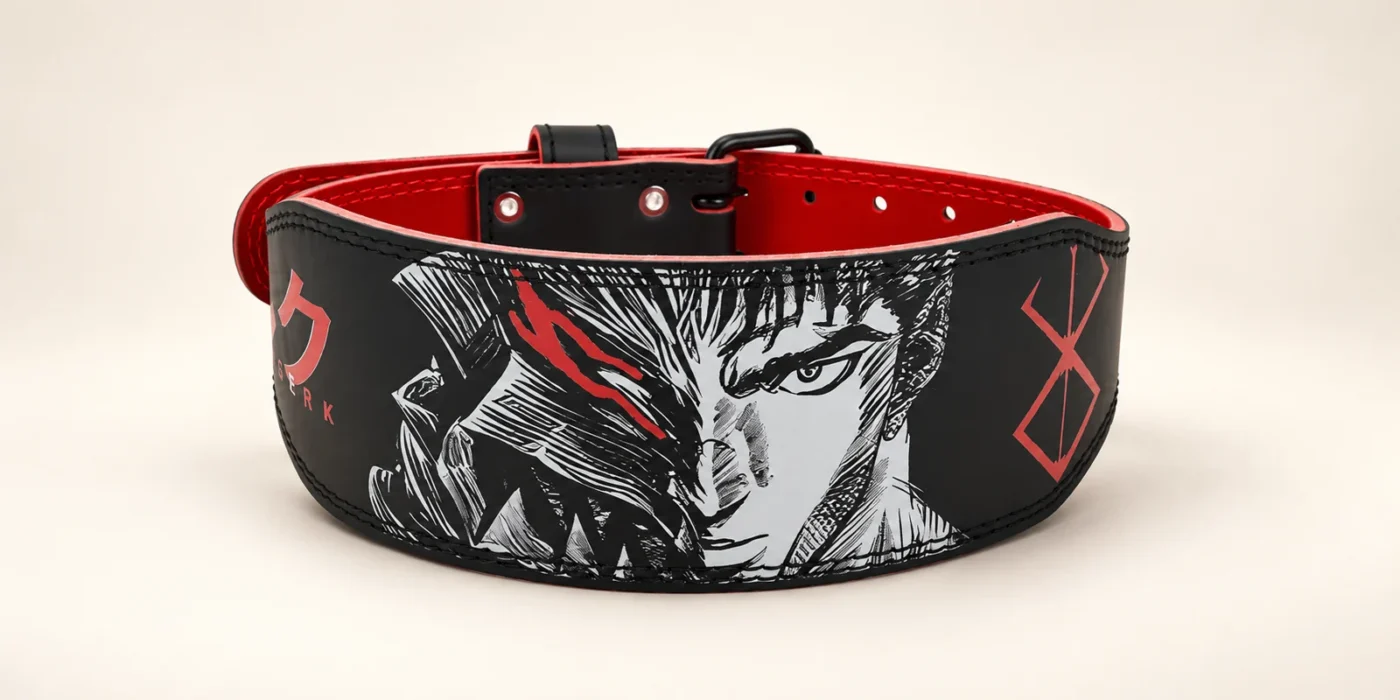
The Gym Pro currently lists a Berserk unisex gym belt and a Samurai weightlifting belt. Compare the live size options and closure details on each page; do not buy solely for the artwork. If a particular variant is unavailable, choose a size and model that really fits rather than accepting a poor substitute.
What to ask before placing an order
Ask for the actual circumference range and belt width of the size you are considering. Check whether the width is uniform or tapered, what closure the model uses and whether the product page has a diagram showing how the measurements were taken. If you plan to use the belt for deadlifts, ask whether you can comfortably reach your normal starting position in that width. A useful answer gives dimensions, not just “true to size.”
When you receive it, keep tags and packaging until you have tried an unloaded movement test and read the return terms. Do not take a new belt straight to a maximal set just to discover whether it pinches. If a specific size is unavailable, check another model rather than choosing the next size up blindly.
Two examples with the same waist measurement
Lifter A has more space between ribs and hips and likes a firm straight belt for squats. Lifter B has a shorter torso and finds that same width uncomfortable when hinging. Their waist measurements are identical, but the best shape may differ. This is why the size chart answers only one part of the question. Torso clearance and movement matter just as much.
The same reasoning applies to clothing worn under the belt. A thick hoodie folded under a belt changes the feel compared with a thin T-shirt. Test the outfit you actually train in, and do not treat “unisex” as a promise that every torso shape will be comfortable.
When a belt is the wrong purchase
If you have not settled on a reliable lifting technique, a belt should not be used to cover up a movement that feels uncontrolled. If every available size is wrong or the belt blocks your setup, wait and choose another model. If pain is part of the reason you want a belt, a qualified clinician or coach can help assess the problem; buying gear alone is not an assessment.
Common questions
Should women buy a smaller belt by default?
No. Measure your own torso where the belt sits and follow that particular product’s chart.
Can I use the same belt for squats and deadlifts?
Often yes, though you may prefer a slight position or tightness adjustment between lifts. A belt that blocks your starting position is not a good fit for that movement.
Will a belt protect me from injury?
Do not treat it as a guarantee. Practise technique and bracing, progress loads sensibly and seek qualified advice if you have pain or an injury.
Buying rule: Match the size chart, check the torso clearance and move in the belt. The label on the product is the least useful part of the decision.
SHOP OUR TOP GYM PRODUCTS
Powerhouse Gym Oversized T-Shirt – LYFT Pump Cover
Men’s Quick-Dry Gym Shorts – Muscle-Fit Training Shorts
Ronnie Coleman Gym Merch – Legalize Tren Cotton T-Shirt
Powerhouse Gym T-Shirt – Vintage Oversized Washed Cotton
Tren and Jerry’s T-Shirt – Funny Gym Pump Cover
Dorian Yates Bodybuilding Oversized Gym T-Shirt
Samurai Weightlifting Belt – Japanese Calligraphy Gym Belt
Joe Weider 1965 Mr Olympia T-Shirt – Oversized Pump Cover
£30.99Original price was: £30.99.£21.99Current price is: £21.99.