



Gym Plateau: A Practical Checklist to Restart Progress
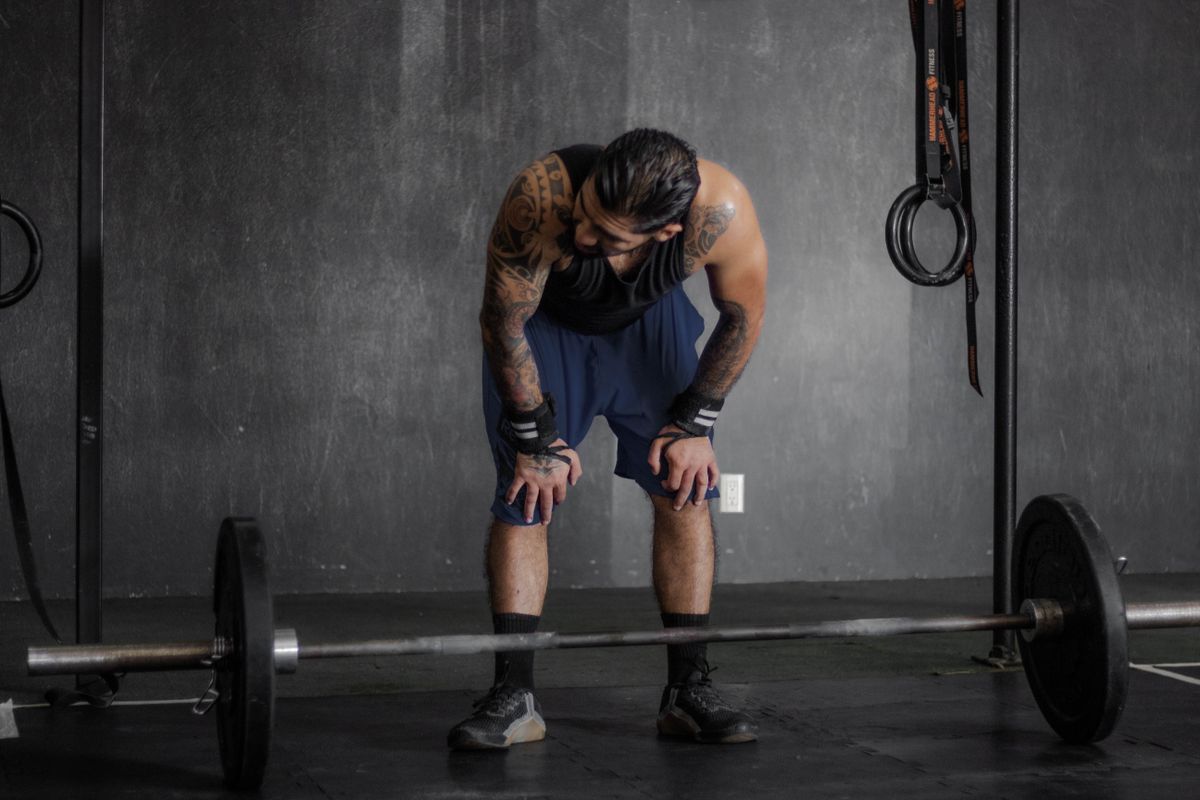
A gym plateau is a sustained lack of progress under reasonably consistent conditions, not one difficult workout. Before changing your entire routine, check whether you are measuring the same task, training consistently and recovering from the workload.
Before calling a stalled lift a plateau, compare like with like: the same exercise, range of motion, load and approximate effort across several sessions. A single rough day after poor sleep tells you less than a steady pattern in your log. If the pattern is real, change one thing—such as recovery time or progression—then give it enough consistent sessions to see whether it helped.
Is it a gym plateau or normal variation?
Performance changes with sleep, stress, exercise order, food and ordinary day-to-day variation. If you matched last week’s weight but lost one repetition after a poor night’s sleep, that is not enough evidence to call the programme ineffective.
Look across several comparable exposures. A movement trained once a week provides less information in a fortnight than one trained three times. Physique changes need an even longer view because body weight, lighting and measurement error can hide small developments.
Define the stalled outcome precisely. Is it a bench-press repetition target, body weight during a gaining phase, waist size during fat loss, or something else? Each points towards a different investigation. Writing “nothing is working” in the log makes the problem feel larger while giving you fewer useful decisions to make.
Step one: standardise what you are comparing
Check the exercise setup before changing the training stimulus. Has the bench angle changed? Are you using a different machine? Did you move the exercise from first to fourth in the session? These differences can change the number without indicating lost ability.
Keep range of motion and technique reasonably consistent. A slower, deeper squat may use less weight while representing better execution. Equally, a heavier but much shorter repetition can create an illusion of progress. Film an occasional set when gym rules and other people’s privacy allow it.
Record load, repetitions, working sets, rest and approximate effort. You do not need laboratory precision, but you need enough context to compare like with like. Our RIR and RPE guide helps you record how close the sets were to your current limit.
Step two: check attendance and the actual programme
Compare the written plan with the sessions you completed. A four-day routine performed twice in a busy week is not the same programme. The solution may be a smaller schedule that you can repeat, rather than a more advanced split.
Look for exercises repeatedly skipped at the end of a session. If one muscle group receives inconsistent work, its slow progress may reflect that pattern. Put priority work earlier or reduce the number of optional exercises.
Also check whether you have changed the routine too frequently to learn it. New exercises often improve quickly through practice, but that does not prove they are superior for long-term growth. Use our sustainable routine guide to fit the programme around your real week. Consistent modest work is easier to evaluate than an ambitious plan that rarely happens.
Step three: review effort and rest periods
Sets that are much easier than intended can leave you with little reason to adapt. On the other hand, taking every compound exercise to failure can make later sets and sessions harder to recover from. Look for a repeatable effort level instead of choosing one extreme.
If repetitions collapse between sets, check rest before adding volume. You may simply need more time to repeat the task well. Keep the rest reasonably consistent while you test that explanation.
For example, if a row drops from twelve repetitions to six after a short pause, try a longer rest at the same load. If the second set improves substantially, you have learned something without changing exercises or adding sets. Our rest-between-sets guide explains how to make the choice around the exercise and your time constraints.
Step four: decide whether fatigue is hiding progress
Look at the whole programme. Are several lifts declining together? Are you unusually sore, sleeping poorly or carrying more stress outside the gym? A general downturn suggests a broader recovery issue more than a problem with one exercise.
A short reduction in training volume can be a useful experiment. Keep familiar movements, perform fewer working sets and avoid pushing every set to its limit. Then return gradually and compare your response. A deload is a planning tool, not a treatment for unexplained illness.
If fatigue is severe, persistent or accompanied by concerning symptoms, seek appropriate medical advice. Do not assume that every problem can be fixed with another rest day. For an ordinary training review, our deload guide gives a more detailed framework for reducing the workload temporarily.
Step five: review food against the current goal
Food intake can become mismatched with activity. A lifter trying to gain muscle may have added steps or cardio while keeping meals unchanged. Someone dieting may be using a deficit that makes maintaining performance increasingly difficult.
Use trends rather than a single weigh-in. If gaining is the goal and average weight has been flat or falling for weeks, review intake alongside training and recovery. If fat loss is the goal, some slowing of strength progress may be part of the trade-off rather than proof of failure.
Keep regular protein-containing meals and enough food to support the chosen goal. The calorie guide can help you estimate and adjust intake. Avoid making a large food increase simply because one isolation exercise has stalled; that is usually too broad a response to too little evidence.
Match the adjustment to the pattern
Use the table as a way to choose a first test. It cannot identify every cause, but it helps prevent the common reaction of changing everything at once.
| Pattern | First thing to investigate | Small experiment |
|---|---|---|
| One lift stalls; others improve | Technique, load increments, exercise order | Use smaller increments or a wider rep range |
| Most lifts decline | Total fatigue, sleep, food, illness | Reduce workload and assess recovery |
| Later sets collapse | Rest duration and first-set effort | Rest longer or stop the first set earlier |
| Training attendance is irregular | Schedule fit | Use fewer weekly sessions |
| Scale stalls during a gaining phase | Intake and activity trends | Consider a modest food adjustment |
Choose the row closest to your actual records. If two explanations fit, test the less disruptive change first unless a health issue requires attention.
Worked example: a dumbbell press that will not move up
Imagine you can press a pair of 20 kg dumbbells for three sets of twelve, but the next pair is 22 kg and you cannot complete your usual target. That is a ten per cent increase per dumbbell, which may be a large step.
Rather than abandoning the exercise, widen the range temporarily. Try the heavier pair for controlled sets nearer the bottom of an 8–12 range, or use equipment with smaller increments if available. Keep the movement and effort comparable.
If you cannot reach a reasonable lower target without losing control, return to the lighter load and build further. These example numbers illustrate equipment management, not a guaranteed progression timetable. The double-progression guide shows how to make the weight increase conditional on performance rather than forcing it every Monday.
When changing exercises or volume makes sense
An exercise change can be sensible if a movement repeatedly irritates you, the equipment does not fit, or a different version is easier to progress and standardise. Choose a replacement that serves the same broad task and establish a new baseline.
Adding sets is more reasonable when attendance, execution, effort and recovery are already good. Start with a small addition, such as one weekly set for the relevant area, instead of doubling the workload. Remove it again if it worsens performance without helping the target.
Reducing sets can also restart useful training when the programme has become excessive. The right direction depends on the pattern. Do not assume stalled growth always means too little work. Keep the change in place for enough comparable sessions to learn from it, unless pain or another clear problem tells you to stop sooner.
A two-week review sheet and common questions
For the next two weeks, record the date, exercise setup, load, repetitions, rest, effort and one recovery note. Write the single variable you are testing at the top. At the end, ask whether the relevant outcome improved under comparable conditions.
Should I test a one-repetition maximum?
Usually you do not need to. A demanding test adds fatigue and does not explain why ordinary working sets stalled. Use submaximal performance unless a strength-testing goal calls for a different approach.
Do I need new supplements?
Not as the first response. Review the basics you can actually measure before adding another product.
When should I get coaching?
If technique is unclear, pain recurs or repeated structured adjustments are not helping, individual input can save guesswork. General guidance such as the ACSM progression position stand supports adapting training to the person; it cannot diagnose your specific plateau from a few numbers.
Keep the review sheet brief enough to use after every workout. A consistent record with six useful fields is better than an elaborate spreadsheet you stop completing after the first session.
SHOP OUR TOP GYM PRODUCTS
Muscle Duke Gym Belt – Powerlifting Belt for Men and Women
Berserk Gym Belt – Weightlifting Belt for Men & Women
I’m Afraid of Women Gym Retro T-Shirt – Funny Bodybuilding Tee
Mr Olympia Weightlifting Belt – PU Leather for Squats & Deadlifts
£45.99Original price was: £45.99.£38.99Current price is: £38.99.Berserk Lever Belt – Anime Powerlifting Gym Belt
£84.99Original price was: £84.99.£69.99Current price is: £69.99.Mike Mentzer Clothing – Uncrowned King Cotton T-Shirt
Mr Olympia Muscle-Fit Sweatshirt – Vintage Bodybuilding Top
£33.99Original price was: £33.99.£26.99Current price is: £26.99.Men’s Oversized Gym Pump Cover – Your Standard LYFT Tee