

How to Build Bigger Traps: Exercises and a Two-Day Plan
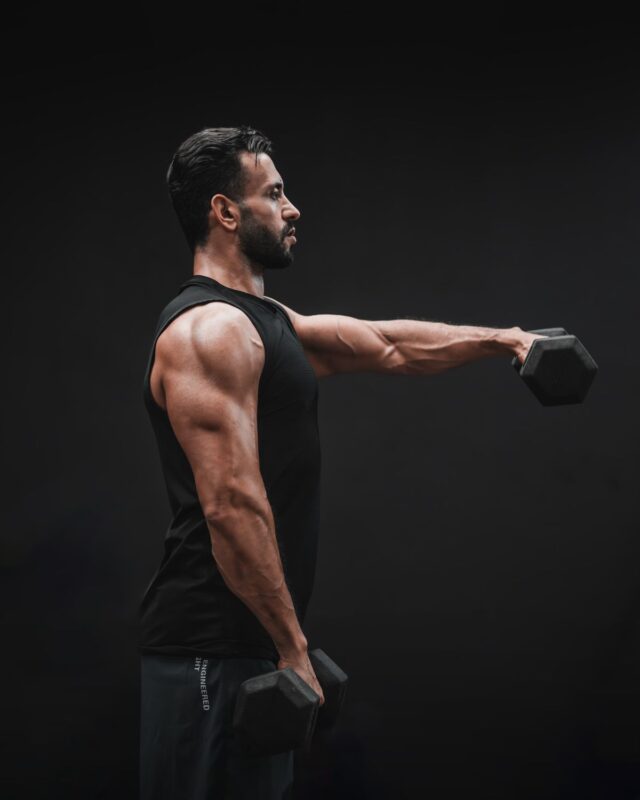
If you want to know how to build bigger traps, start with controlled shrugs and well-chosen upper-back work, then track progress instead of adding weight at any cost. Two short additions to your normal pulling sessions are a practical starting point.
A shrug is easy to turn into a whole-body heave once the weight gets heavy. Start with a load that lets your shoulders rise and lower under control, then note whether the next session improves without cutting the range short. Rows and carries may already provide plenty of upper-back work; add direct sets only where they fill a gap in your programme.
How to build bigger traps without overcomplicating it
Choose one shrug variation you can load comfortably, one supported row and one lighter movement that challenges shoulder-blade control. Keep them in the programme for several weeks so you can compare performance. Changing between six versions every session makes it harder to see what is working.
Start by checking how much work you already do. Rows, deadlift variations and loaded carries involve the upper back to different degrees. A lifter performing several demanding pulling sessions may need only a few direct shrug sets, while somebody with little upper-back work may need a more balanced routine.
Your first target is repeatable execution. Record the exercise, load, repetitions and approximate effort. Increase resistance only when the intended shoulder movement remains clear. More weight is useful when it produces a harder version of the same exercise, not when it turns a shrug into a whole-body bounce.
Upper, middle and lower traps: useful distinctions
The upper traps help elevate and upwardly rotate the shoulder blades. The middle region contributes to drawing the shoulder blades towards the spine, and the lower region assists their control, including upward rotation. These areas cooperate with other muscles rather than switching on independently.
Shrugs give you a straightforward way to train loaded elevation. Rows provide a different challenge, especially when the shoulder blades can move naturally instead of being held rigidly throughout. Light Y-shaped raises can be used to practise another pattern, although they do not require the same loads as rows.
You do not need to isolate every fibre with a separate exercise. Use these distinctions to avoid a programme made entirely of increasingly heavy shrugs. For a wider view of upper-body exercise selection, see our back workout guide. The goal is a stronger, more developed upper back, not an anatomical checklist performed to exhaustion.
Dumbbell shrug technique
Stand with dumbbells beside your thighs and your head in a comfortable neutral position. Let the arms hang naturally. Raise your shoulders smoothly, pause briefly where you can control the load, and lower them without dropping abruptly into the bottom.
- Choose a weight you can hold securely.
- Keep the torso still and knees softly unlocked.
- Move the shoulders upwards without bending the elbows to curl the weights.
- Lower with control and repeat the same range.
There is no need to roll your shoulders in circles. That adds a different movement without making the upward load heavier. Likewise, jutting your head forward does not help the traps complete the repetition. If grip is the limiting factor, reduce the load or consider appropriate lifting straps once you know how to use them. Straps do not justify a weight you cannot otherwise control.
Supported rows and lighter shoulder-blade work
A chest-supported row lets you train the upper back with less demand on holding a bent-over position. Set the bench or machine so you can reach comfortably, then pull without thrusting your chest away from the support. Let the shoulder blades move through a controlled range.
Choose an elbow path that feels comfortable rather than forcing the arms into an extreme flare. The exact path changes which muscles contribute, but a row does not become a pure trap exercise simply because the elbows are higher. Keep your wrist position stable and avoid shrugging every repetition towards your ears.
For a light incline Y-raise, use little or no external weight initially. Raise the arms diagonally in a comfortable range while avoiding a large back arch. This is a control exercise, not a contest with your lateral-raise dumbbells. If it irritates the shoulder, omit it and get advice on an appropriate substitute.
A two-day trap workout
Add the following work to two existing sessions separated by at least a day. The supported rows can replace rows already in your programme; they do not have to be added on top. Begin at the lower end of the set ranges.
| Day | Movement | Sets | Target |
|---|---|---|---|
| A | Dumbbell shrug | 2–3 | 10–15 reps |
| A | Chest-supported row | 2–3 | 8–12 reps |
| B | Machine or dumbbell shrug | 2 | 12–15 reps |
| B | Light incline Y-raise | 2 | 10–15 controlled reps |
Rest about 90–150 seconds for shrugs and rows, extending this if it helps preserve quality. The lighter movement may need less. Finish with some clean repetitions available rather than pulling your neck into an awkward position to complete a prescribed number.
When carries fit the plan
Farmer carries train holding and moving with a load. They can challenge grip and the upper body while adding a different whole-body task. Use a clear walking route, manageable dumbbells or suitable handles, and an upright position you can maintain.
Two short carries can replace the second day’s shrugs if you enjoy them and have appropriate space. Record distance or time as well as weight. A 20-metre carry with a heavy load is not directly comparable with a minute of walking with lighter dumbbells.
Do not add carries automatically if deadlifts and rows already leave your grip exhausted. The useful question is whether they serve a goal your current work does not cover. Avoid weaving between other gym users or walking to the point where you risk dropping equipment. A controlled finish is part of a good set.
How to progress shrugs and rows
Use a repetition range rather than insisting on a heavier load every week. If your shrug target is 10–15, keep the weight until both sets reach fifteen with a similar pause and range. Then try a small increase and rebuild from fewer repetitions.
For example, 12 and 11 repetitions may become 13 and 12, then eventually 15 and 15. The next increase might bring you back to 11 and 10. That is a normal pattern, not a loss of progress. These numbers illustrate a decision rule rather than a predicted timeline.
Use the same principle for rows, but track them separately. Our progressive overload guide includes options for large weight jumps. If your grip fails before your upper back works hard, deal with that limitation before deciding the trap muscles have stopped responding.
Mistakes that make the log misleading
Shortening the shrug as the dumbbells get heavier is the obvious one. Others include leaning back, bouncing through the knees, bending the elbows or gradually replacing a supported row with a chest lift from the bench. Film an occasional set from the side if you cannot tell.
A second mistake is comparing unfamiliar equipment as though the numbers are equivalent. Machines use different leverages and friction. Establish a fresh baseline when you change equipment and keep the rest of the setup stable.
A third is treating next-day soreness as proof of growth. Unfamiliar exercise can make you sore without being better suited to your goals. Track performance across several weeks and keep enough recovery between sessions. If neck stiffness regularly interferes with daily movement, stop escalating the programme and address the problem rather than celebrating it as productive training.
Recovery, food and realistic expectations
Trap training still depends on the same basics as the rest of your programme: manageable workload, enough food for the goal and consistent sleep. Extra direct work can be counterproductive if it reduces the quality of your main back sessions.
Take photos under similar conditions if appearance matters to you, but do not judge progress from one pumped photo. Shoulder width, neck length and muscle attachments influence how prominent the traps look. You can improve development without matching another person’s proportions.
Review your workload after several consistent weeks. If repetitions are increasing and you feel recovered, maintain the plan. If performance is flat but recovery is good, a small volume change may be worth testing. If several lifts are declining, read our deload guide before adding still more shrug sets.
Trap training questions and evidence
Are deadlifts enough for bigger traps?
They load the upper back, but whether you want extra direct work depends on your routine and priorities. You do not need to add heavy deadlifts solely to train traps if a simpler shrug variation suits you better.
Can I train traps with shoulders?
Yes. Put the most important exercises first and account for the next pulling session. The shoulder workout guide can help you organise the overlap.
Is this exact plan scientifically proven?
No. It is an illustrative programme built around common resistance-training principles. The ACSM progression position stand supports adapting progressive training to goals and experience; it does not validate this exact combination or guarantee a result. Use the log and your response to decide what to change.
SHOP OUR TOP GYM PRODUCTS
Ronnie Coleman T-Shirt – Funny Bodybuilding Gym Tee
Men’s Oversized Gym Pump Cover – Your Standard LYFT Tee
Creatine Meme T-Shirt – Funny Gym Shirt for Men
Joe Weider 1965 Mr Olympia T-Shirt – Oversized Pump Cover
£30.99Original price was: £30.99.£21.99Current price is: £21.99.Powerhouse Gym T-Shirt – Vintage Oversized Washed Cotton
Loose Bodybuilding Trousers – Hardcore Gym Workout Pants
Yujiro Hanma Gym Hoodie – Oversized Anime Pump Cover
£32.99Original price was: £32.99.£23.99Current price is: £23.99.I’m Afraid of Women Gym Retro T-Shirt – Funny Bodybuilding Tee