



Full Body Workout 3 Days a Week: A Complete Muscle-Building Plan

You do not need to train six days a week to build muscle. A well-designed full-body workout three days a week can provide enough training stimulus for beginners and intermediate lifters while leaving plenty of time for recovery, work and normal life.
This guide shows how to structure three full-body sessions, choose exercises, manage volume and progress without turning every workout into a marathon.
Why Three-Day Full Body Training Works
Training each major muscle group several times per week gives you regular opportunities to practise exercises and stimulate adaptation. It also means missing one workout does not necessarily leave an entire muscle group untrained for a week.
For many people, three sessions are easier to fit around work and family commitments than a high-frequency programme. Consistency is a major advantage.
How to Structure the Week
Monday, Wednesday and Friday is a simple option. Tuesday, Thursday and Saturday can work just as well. Leave at least a day between hard sessions when possible.
Workout A
- Squat or leg press: 3 x 6-10
- Bench press: 3 x 6-10
- Lat pulldown: 3 x 8-12
- Romanian deadlift: 2 x 8-12
- Lateral raise: 2 x 12-20
- Curl: 2 x 10-15
Workout B
- Romanian deadlift or hip hinge: 3 x 6-10
- Incline dumbbell press: 3 x 8-12
- Seated cable row: 3 x 8-12
- Leg press: 3 x 10-15
- Rear-delt fly: 2 x 12-20
- Triceps pushdown: 2 x 10-15
Workout C
- Hack squat or goblet squat: 3 x 8-12
- Machine chest press: 3 x 8-12
- Pull-up or pulldown: 3 x 8-12
- Leg curl: 3 x 10-15
- Lateral raise: 2 x 12-20
- Calf raise: 3 x 10-15
Sets and Reps
Compound exercises can use roughly 6 to 12 repetitions, while isolation work can use 10 to 20. You do not need to train every set to failure. Leave a small number of controlled repetitions available on most compound work.
Progression
Use double progression. If your target is 8 to 12 repetitions, keep the load until you can reach the top of the range with good technique, then increase the weight slightly. Track every workout.
Recovery
Three full-body sessions still create fatigue, so sleep and rest matter. Avoid adding random high-intensity workouts on your rest days. Walking and normal activity are fine, but the programme should leave you ready to train again.
Nutrition
Eat enough protein and calories for your goal. Around 1.6 to 2.2 grams of protein per kilogram per day is a practical target for many resistance-trained adults. If gaining muscle, a modest calorie surplus can help.
Common Mistakes
- Doing too many exercises.
- Using maximum weights every session.
- Changing the programme every week.
- Ignoring legs or back.
- Adding cardio that interferes with recovery.
- Failing to track progress.
Final Plan
Three full-body workouts can build significant muscle and strength when the exercises are sensible and progression is consistent. Keep the routine simple, recover properly and give it enough time to work.
If you want a more detailed bodybuilding framework, see Olympian Sculpt. For beginners, the free 7 Gym Commandments is a useful starting point.
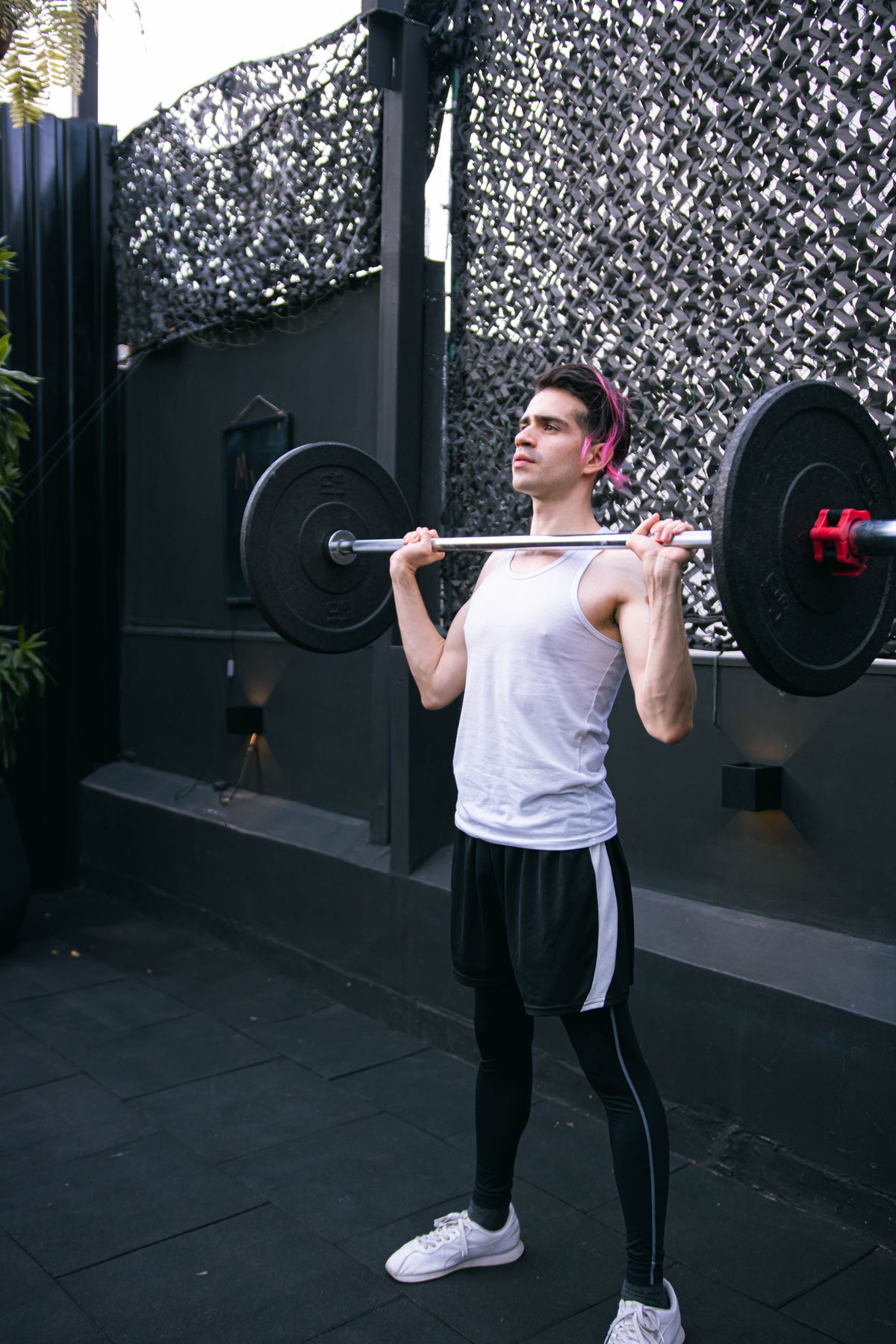
Keeping Sessions Efficient
A three-day programme should not require three-hour sessions. Focus on the movements that provide the most value and keep accessories limited. Use sensible rest periods and prepare your equipment before the working sets. If time is short, keep the first four exercises and remove optional accessories rather than rushing everything.
For Beginners
Beginners can start with even less volume. Two working sets per exercise may be enough while technique is being learned. As confidence and recovery improve, add a third set to selected movements. The goal is to create a routine you can repeat, not to prove how much work you can survive.
For Intermediate Lifters
Intermediate lifters can increase volume selectively. If your chest is progressing but your back has stalled, add a set to one row or pulldown rather than increasing every exercise. If recovery becomes worse, reverse the change. More volume should be earned by a need for additional stimulus.
Choosing Exercises
Use movements that suit your equipment and body. A machine chest press can replace a barbell bench press. A hack squat can replace a back squat. A chest-supported row can replace a bent-over row. The important qualities are stability, comfort, a useful range of motion and the ability to progress.
What If You Miss a Session?
Do not double the next workout. Simply continue with the next session in the sequence. If Monday is missed, Wednesday can become Workout A and Friday Workout B. The following Monday can be Workout C. This keeps the programme flexible and prevents one missed day from becoming a missed week.
Adding Cardio
Walking and moderate cardio can fit around three full-body sessions. If muscle gain is the priority, avoid adding large amounts of high-intensity cardio that make your legs constantly tired. If cardiovascular fitness is equally important, schedule cardio deliberately and monitor how it affects lifting performance.
Track the Right Things
Record the exercise, load, repetitions and sets. Also note anything that affects performance, such as poor sleep or an unusual schedule. Over several weeks, the log will show whether you are actually progressing. Do not judge the programme by one bad workout.
This article provides general fitness education and is not individual medical or coaching advice.
SHOP OUR TOP GYM PRODUCTS
Men’s Quick-Dry Gym Shorts – Muscle-Fit Training Shorts
Smart Body Composition Scale – Bluetooth LCD Fitness Tracker
£38.99Original price was: £38.99.£29.99Current price is: £29.99.Mr Olympia Amateur Korea T-Shirt – Oversized Cotton Tee
Berserk Muscle-Fit Gym T-Shirt – Anime Workout Tee
Barbell Brigade Pump Cover – Bronze & Red Gym T-Shirt
Nasser El Sonbaty Shirt – Uncrowned Mr Olympia T-Shirt
No Pain No Gain Weightlifting Belt – Heavy-Duty Support
£32.99Original price was: £32.99.£26.99Current price is: £26.99.Yujiro Hanma Gym Hoodie – Oversized Anime Pump Cover
£32.99Original price was: £32.99.£25.99Current price is: £25.99.