



How to Get Your First Pull-Up: An 8-Week Practice Plan
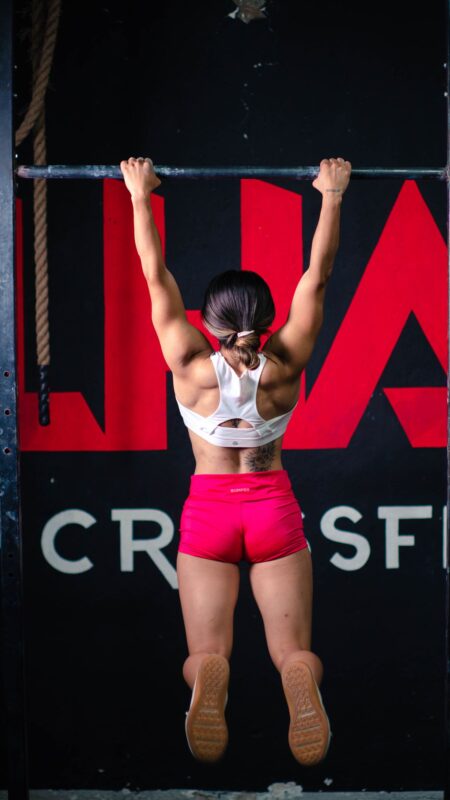
Build your first pull-up with regular assisted repetitions, a repeatable range of motion and gradual reductions in assistance. Eight weeks is a practice block, not a promise that everyone will complete an unassisted rep by then.
Your first pull-up is a useful strength milestone, but getting there does not require endless attempts at an exercise you cannot yet complete. A better approach builds the required pulling strength gradually through assisted pull-ups, pulldowns, rows and controlled practice.
Two weekly sessions, separated by recovery days
| Weeks | Session A | Session B |
|---|---|---|
| 1–2 | Assisted pull-up 3 × 5; comfortable supported hang 2 × 10–20 seconds | Lat pulldown 3 × 8; chest-supported row 2 × 10 |
| 3–4 | Assisted pull-up 3 × 5–8; supported hang 2 sets | Assisted pull-up 3 × 5; row 2 × 10 |
| 5–6 | Reduce assistance only after 3 × 8 controlled reps | Assisted pull-up 2 × 6; optionally 2 × 2 controlled negatives |
| 7–8 | Continue assistance progression; avoid grinding | One fresh unassisted attempt if ready, then assisted practice |
Use enough assistance to finish with about two good repetitions left. Rest around two minutes between working sets, longer if needed for consistent performance. This replaces some of your normal back work; adding it on top of a large existing pulling programme can make recovery harder.
Choose assistance you can measure
An assisted machine makes it easy to record the setting, but different machines are not directly comparable. More counterweight usually means more assistance. Bands provide changing assistance through the movement and are harder to quantify. Record the band, how it is attached and whether your foot or knee is supported so the next session is comparable.
Use a stable platform to reach the bar. For negatives, start at the top without an uncontrolled jump, lower over a few comfortable seconds and step down. Omit negatives if you cannot control the lowering or they cause excessive soreness. They are optional; assisted full repetitions can remain the main practice.
What counts as the first rep?
Choose a consistent standard: begin with arms extended in a shoulder position you can comfortably control, pull until your chin clears the bar without craning your neck, and lower under control. Avoid swinging or kicking if your goal is a strict pull-up. A chin-up with palms facing you is a valid separate exercise, but record which variation you are practising.
Test when fresh after an easy warm-up, not after exhausting your arms. One or two attempts are enough. If the rep is not there, resume assistance and review your progress after another block. A decrease in assistance at the same repetitions is meaningful progress even before the first full rep.
Do not assume weight loss is required. Strength, practice, body mass and limb proportions all affect the task. A sustainable training and nutrition plan is more useful than crash dieting to make the bar easier.
What a Pull-Up Requires
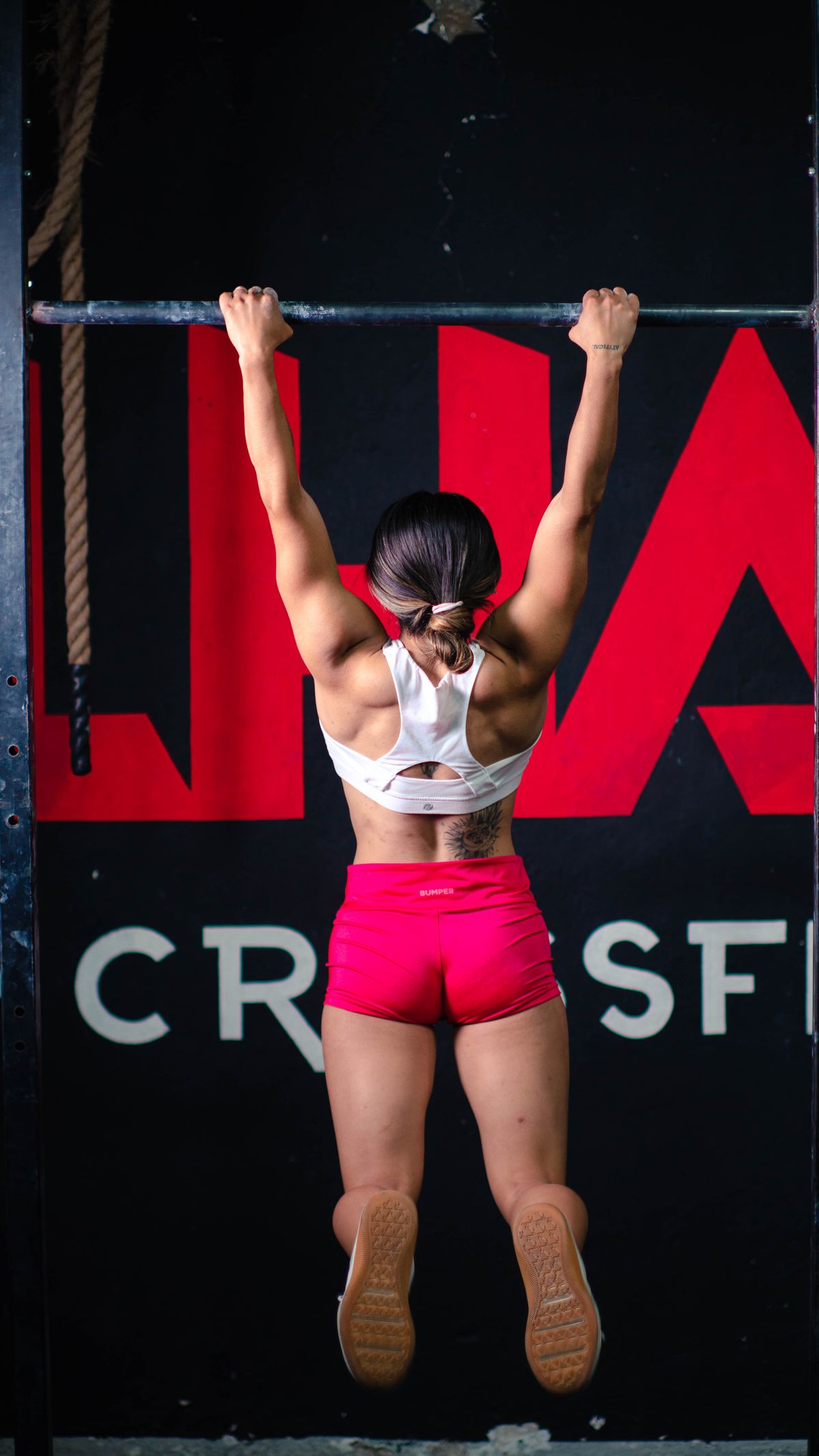
A pull-up requires enough strength to move your body through a controlled range while your hands support your body weight. The lats, biceps, upper back and grip all contribute.
Dead Hangs
Dead hangs can help you become comfortable supporting your body weight. Start with short holds and gradually increase the time. Do not continue if your shoulders or elbows become painful.
Lat Pulldowns
Lat pulldowns let you train the pulling pattern with adjustable resistance. Use a controlled range and avoid swinging. Gradually increase the load or repetitions over time.
Assisted Pull-Ups
Assisted pull-up machines or resistance bands reduce the amount of body weight you need to lift. Choose enough assistance to perform controlled repetitions and gradually reduce the assistance as you become stronger.
Negatives
Jump or step to the top position and lower yourself slowly. Negatives can provide a useful strength stimulus, but they can also create soreness, so use a small number of controlled repetitions.
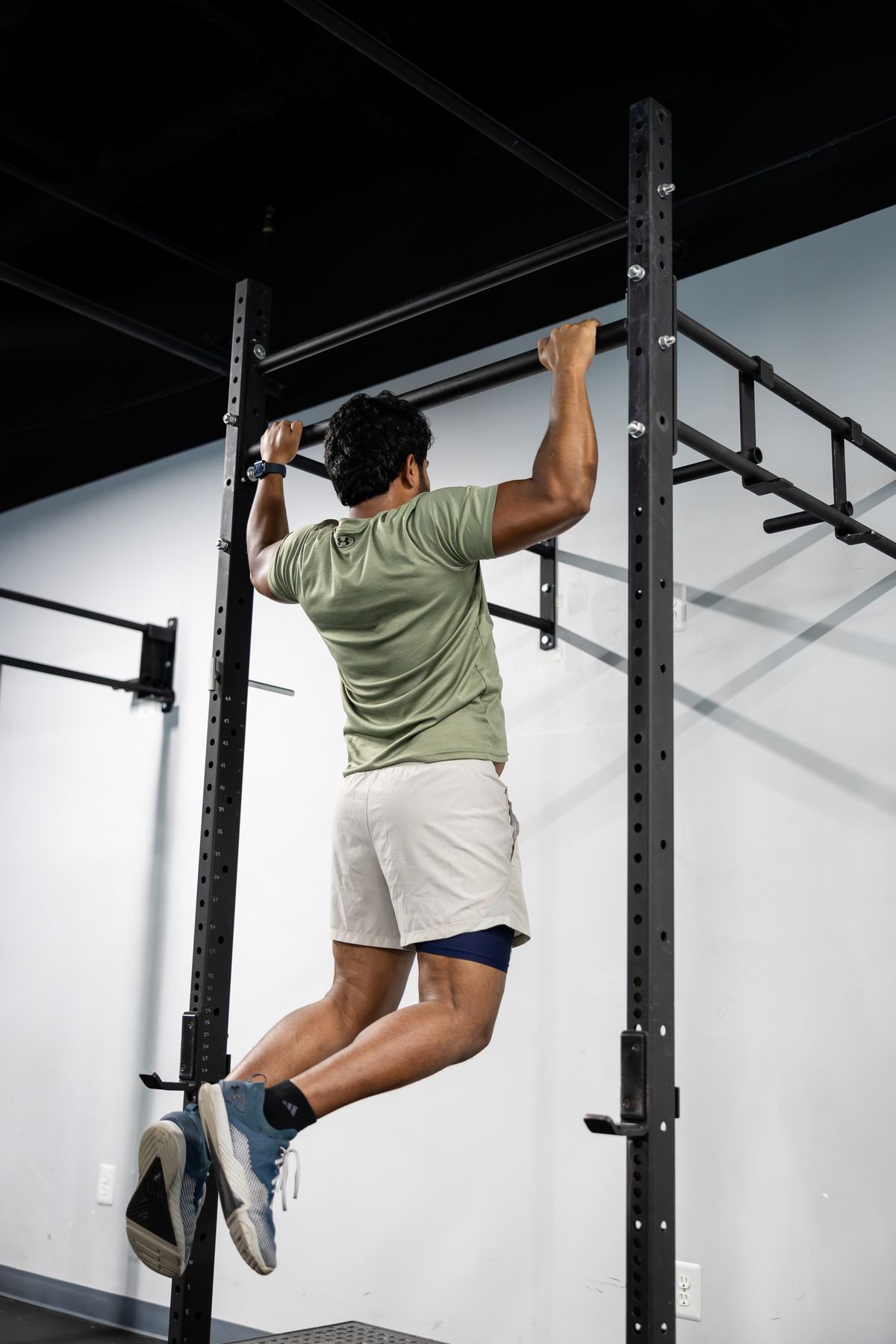
How to use the eight-week practice block
Use the two-session progression table near the start of this guide. Repeat or extend a phase when you need more practice; there is no deadline for achieving the first repetition.
Common Mistakes
- Kipping when the goal is a strict pull-up.
- Practising failure attempts every day.
- Using too little assistance.
- Ignoring grip strength.
- Failing to train rows and pulldowns.
How to Progress
Progress by increasing repetitions, reducing assistance, improving range of motion or increasing hang time. Do not change everything at once.
Nutrition and Body Weight
Pull-up performance depends partly on relative strength. Building muscle can help, but if body weight is also increasing quickly, the exercise can become harder. Maintain adequate protein and train consistently.
Building Grip Strength
Grip can be a limiting factor even when your back and arms are strong enough. Dead hangs, farmer carries and controlled rows can help. You do not need to train grip every day. A few sets at the end of selected sessions are enough for most beginners.
Scapular Pull-Ups
Scapular pull-ups can teach you to move the shoulder blades while hanging. Use a small range and focus on control. They are not a substitute for full pull-ups, but they can help you learn the starting position and develop familiarity with the movement.
Body Weight and Pull-Ups
Because a pull-up moves your body weight, changes in body weight affect difficulty. That does not mean you should chase weight loss solely to achieve a pull-up. If fat loss is already a goal, a moderate calorie deficit combined with resistance training can improve relative strength.
When to Test
Test an unassisted pull-up occasionally rather than every day. A good time is after a warm-up when you are fresh. If you cannot complete one, return to the progression instead of repeatedly grinding failed attempts.
After Your First Rep
Once you can perform one strict pull-up, build the number gradually. Use multiple singles or low-repetition sets, then add repetitions as strength improves. Eventually, weighted pull-ups can become a useful progression if strength is a priority.
Final Tips
Train pulling strength several times per week, use assisted variations and practise the movement without constantly testing failure. If you want a complete programme, check out Olympian Sculpt.
Related guides
- Back Workout: A Practical Plan for Lats and Upper Back
- Rest Between Sets: A Practical Guide for Muscle Growth
- Rest Days and Recovery: Sleep, Soreness and Readiness
Further reading: ACSM resistance-training recommendations (2026). The worked programmes here are adjustable examples, not programmes tested in that publication.
This article provides general fitness education and is not individual medical or coaching advice.
SHOP OUR TOP GYM PRODUCTS
Body Composition Scale with Handheld Sensor & 1.5 m Cable
£124.99Original price was: £124.99.£89.99Current price is: £89.99.Men’s Quick-Dry Gym Shorts – Muscle-Fit Training Shorts
Mike Mentzer Clothing – Uncrowned King Cotton T-Shirt
Powerhouse Gym Oversized T-Shirt – LYFT Pump Cover
Joe Weider 1965 Mr Olympia T-Shirt – Oversized Pump Cover
£30.99Original price was: £30.99.£21.99Current price is: £21.99.Berserk Lever Belt – Anime Powerlifting Gym Belt
£84.99Original price was: £84.99.£69.99Current price is: £69.99.Mr Olympia Amateur Korea T-Shirt – Oversized Cotton Tee
I’m Afraid of Women Gym Retro T-Shirt – Funny Bodybuilding Tee